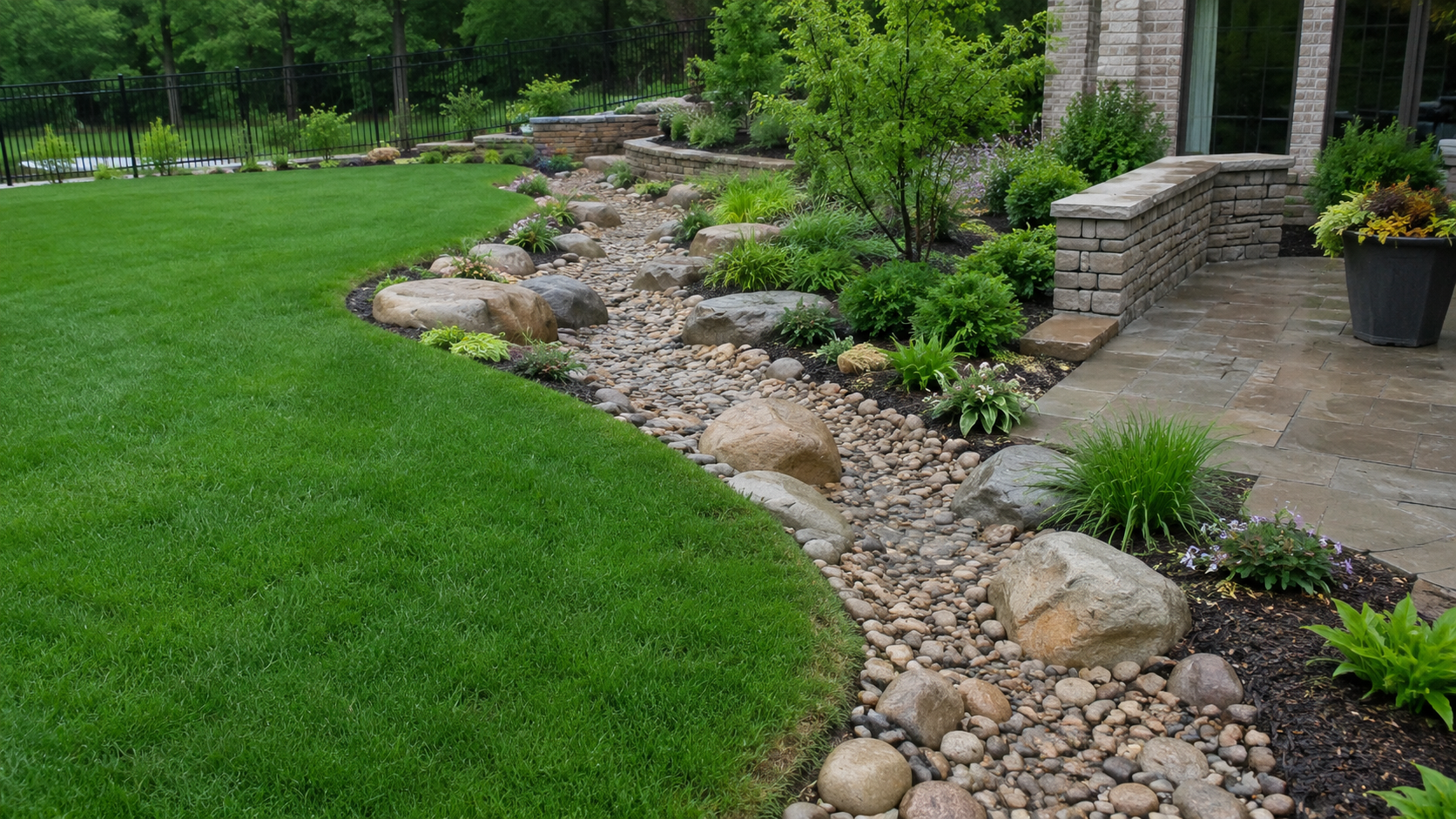
To fix standing water in your Tulsa backyard, find the cause first, since most pooling comes from poor grading, compacted clay soil, or low spots that trap water. The most reliable fixes regrade the yard to slope water away, add permeable pavers or a properly sloped patio, build a retaining wall to terrace a slope, or shape a dry creek bed to carry runoff. Because Oklahoma clay drains slowly, the right fix usually moves water across the surface instead of waiting for it to soak in.
Standing water in your backyard turns a usable yard into a muddy, buggy mess, and in Tulsa it usually traces back to our heavy clay soil. After a good Oklahoma rain, water sits on top of compacted clay for days because it cannot soak in fast enough. The good news is that the right grading and hardscape work drains the yard for good. This guide covers what causes the pooling, why it matters, and the fixes that actually work in Tulsa yards.
Arrow Outdoor Living solves backyard drainage through the hardscape and grading we already build, from regrading and patios to retaining walls and dry creek beds. Here is how to get your yard dry and usable again.
What Causes Standing Water in a Tulsa Backyard?
Standing water in a Tulsa backyard usually comes from poor grading and our heavy clay soil, which together stop water from draining away. A few culprits show up again and again in local yards:
- Heavy clay soil: Tulsa’s tight red clay soaks up water slowly, so rain sits on the surface long after the storm passes.
- Poor grading: A yard that slopes toward the house, or sits flat, has nowhere to send water.
- Low spots: Settled areas and dips collect runoff and hold it like a shallow bowl.
- Compacted soil: Construction traffic and foot paths pack the soil down, which cuts off what little drainage the clay offered.
- Downspouts: Gutters that dump roof water right next to the foundation flood the same spot every storm.
- Hard surfaces: Patios, driveways, and walkways shed water that has to go somewhere, and a poorly drained yard catches it.
Pinpointing the cause matters, because the fix for a low spot is different from the fix for a yard that slopes the wrong way.
What Are the Signs of a Backyard Drainage Problem?
The clearest sign of a drainage problem is water that stands for more than a day after rain stops. A few other red flags point to the same issue:
- A lawn that stays mushy or squishy long after a storm.
- Mosquitoes gathering around the same low areas.
- Mulch or soil washing out of beds and across walkways.
- Moss, mold, or bare muddy patches where grass will not grow.
- Water or dampness showing up in a crawl space or against the foundation.
If any of these sound familiar, the yard is telling you that water has nowhere good to go.
Why Standing Water in Your Backyard Is a Problem
Standing water in your backyard is a problem because it threatens your foundation, your lawn, and your family’s comfort. Water that pools against the house puts pressure on the foundation and can lead to cracks and moisture in a crawl space. Sitting water also drowns grass, breeds mosquitoes, and leaves muddy patches you cannot use. In Oklahoma’s freeze-and-thaw winters, trapped water makes soil movement worse, which can shift patios and walls that sit on it. Fixing drainage protects both your home and your yard.
How Do You Get Rid of Standing Water in Your Yard?
You get rid of standing water by moving it across the surface and away from the house, since Oklahoma clay drains too slowly to count on soaking it in. These are the fixes that work best in Tulsa:
- Regrade the yard: Reshaping the soil so it slopes away from the house is the first and most important fix. Proper grade sends water to the edges of the property instead of into low spots.
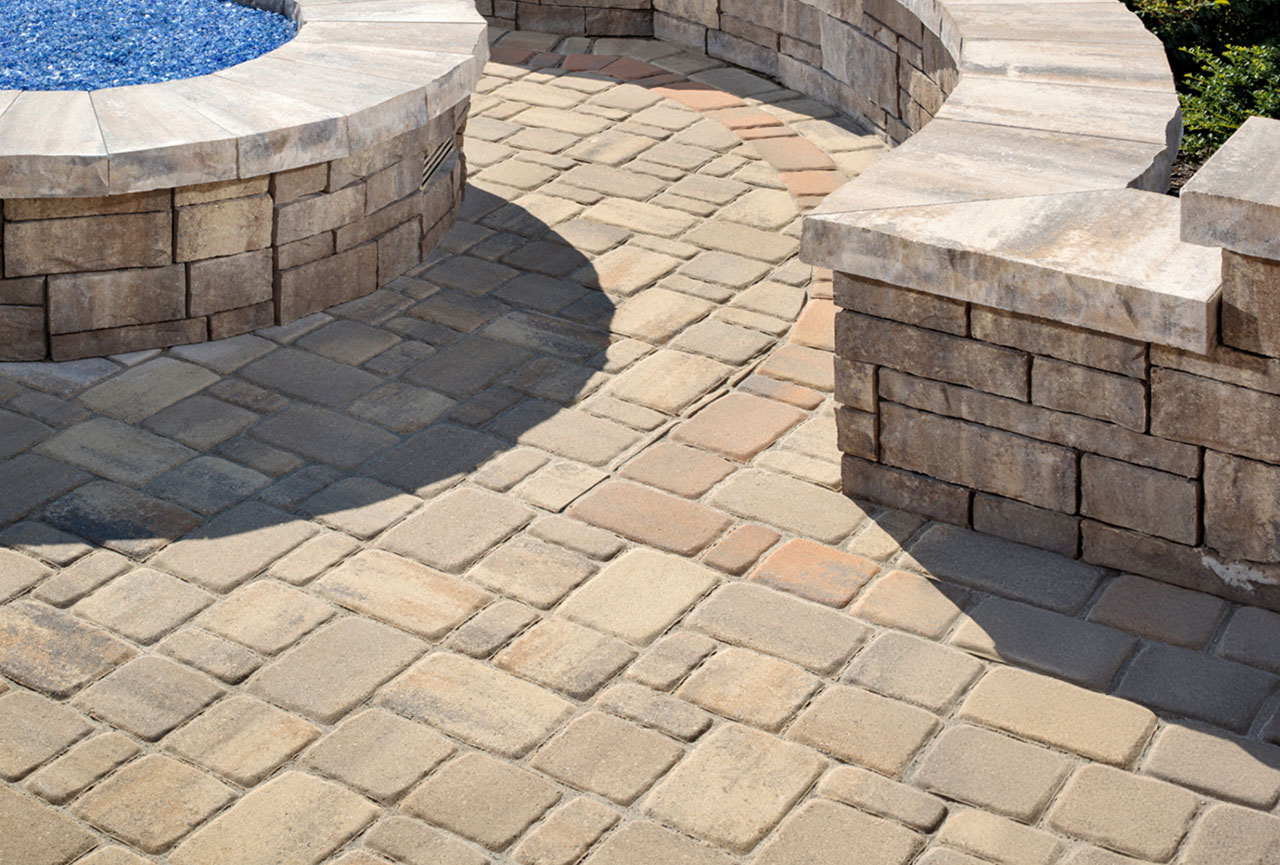
- Add permeable pavers: A permeable paver patio or walkway lets rainwater pass through the joints instead of running off, which eases the load on a soggy yard.
- Build a retaining wall: On a sloped lot, a retaining wall terraces the grade, holds soil in place, and creates level, well-drained space behind it.
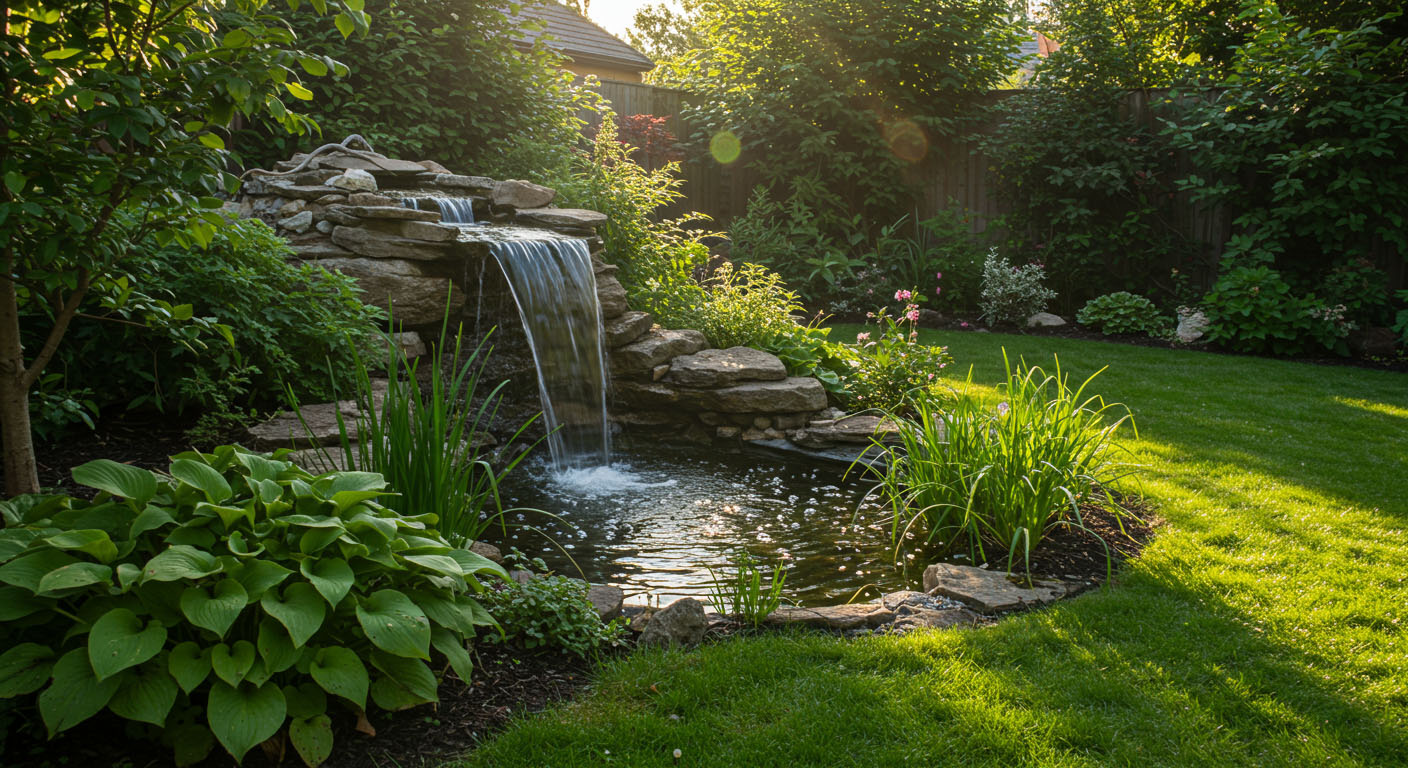
- Shape a dry creek bed: A gravel-and-stone channel carries runoff across the yard and doubles as an attractive landscape feature that looks intentional even when it is dry.
- Slope your hardscape: A patio or driveway with the right pitch sheds water away from the house instead of toward it.
- Fix the downspouts: Extending downspouts away from the foundation keeps roof water from pooling at the worst possible spot.
Most yards need a combination, and the right mix depends on the cause and the lay of your land.
Fixing Standing Water with Hardscaping and Grading
The most lasting fixes for standing water come from grading and hardscape, which is exactly what a design-build crew handles. Regrading is the foundation of any drainage fix, and our landscape design team reshapes the yard so water flows where it should. For sloped lots, our skilled masons build retaining walls that terrace the grade and keep soil from washing into low spots.
Hard surfaces play a role too. Our Tulsa paver installers can build a permeable paver patio that lets water soak through, and our concrete crew pours patios with the right slope so they shed water away from your home. Tying these together, a single plan can solve the drainage problem and upgrade your backyard at the same time.
Can You Fix Drainage Without Tearing Up the Whole Yard?
Yes, many Tulsa drainage problems get solved by treating the problem area instead of the entire yard. If water collects in one low corner, regrading that section and adding a dry creek bed can move it without touching the rest of the lawn. A single downspout extension or a permeable paver landing in the right spot often handles a smaller issue on its own.
Bigger or whole-yard problems call for a fuller plan, with grading and hardscape working together. The first step is the same either way: figure out where the water comes from and where it should go. That is what we sort out during a free on-site visit before any work starts.
How Do You Fix Standing Water in Oklahoma’s Clay Soil?
You fix standing water in Oklahoma clay soil by moving water across the surface and improving drainage where you can, because clay holds water far longer than sandy soil. Amending planting beds with compost helps plants, and the OSU Extension explains how grading and soil structure shape landscape drainage in our region. For the yard itself, though, surface solutions work faster than waiting on the clay.
Permeable pavers are one of the best clay-soil tools, since they capture rain at the surface and route it into a gravel base instead of letting it pool. Pairing permeable surfaces with proper grading and a dry creek bed gives clay-heavy Tulsa yards a path for water to leave quickly, even after a heavy storm.
Fix Your Tulsa Backyard Drainage with Arrow Outdoor Living
Standing water is a solvable problem, and the right grading and hardscape make your yard dry, usable, and good-looking again. Arrow Outdoor Living designs and builds drainage-smart outdoor spaces across Tulsa, Broken Arrow, Bixby, Jenks, and Owasso. Our in-house crews handle the grading, hardscape, and stonework that keep water moving the right way.
Tired of the swamp in your yard after every storm? Request your free quote today or call us at 918-300-0379. We will walk your yard, find the source of the water, and design a fix that drains it for good.