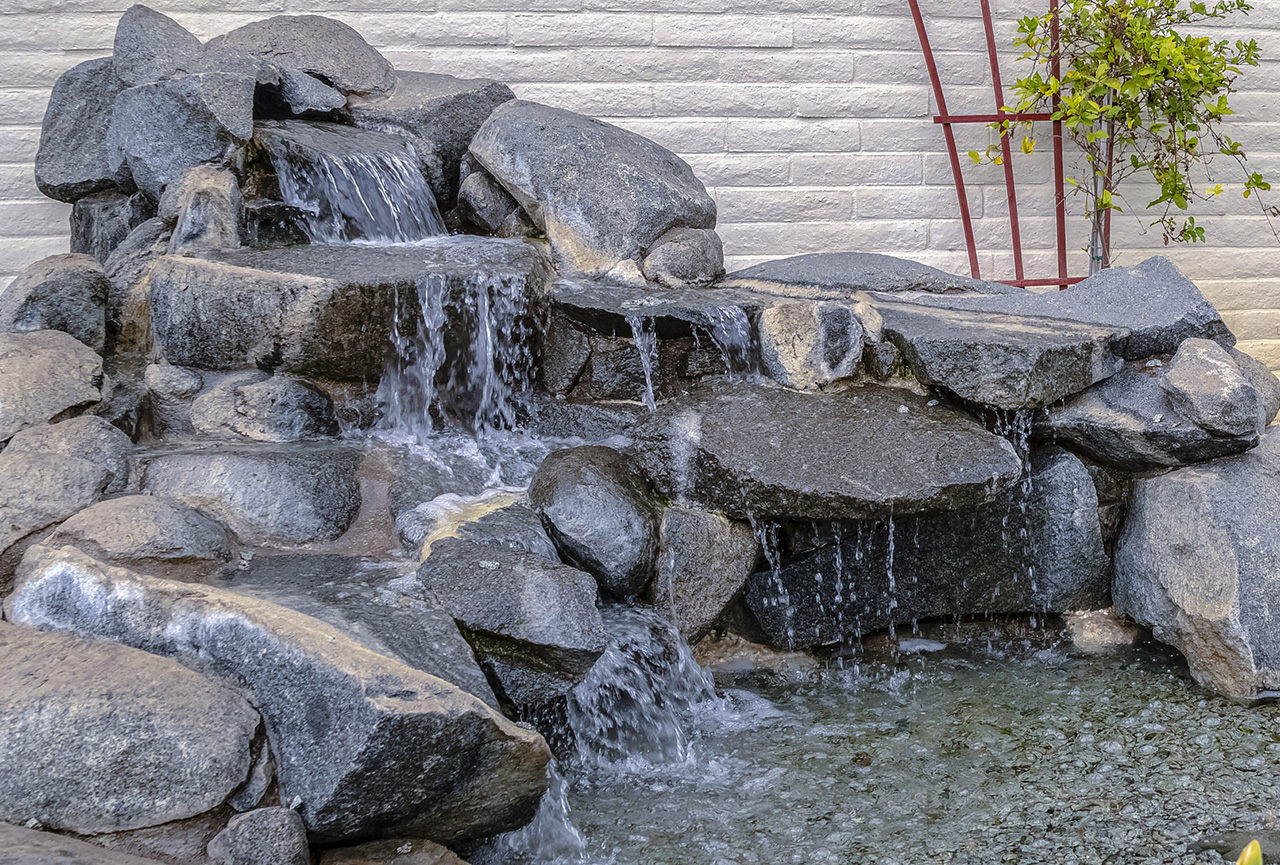
What’s the best backyard water feature for a Tulsa home? The most popular options are pondless waterfalls, bubbling rock features, decorative fountains, and koi ponds — each with a different price point, maintenance level, and aesthetic. Most installed water features in the Tulsa market start around $3,000 for a simple bubbling rock and range up to $20,000 or more for a custom multi-tiered waterfall or pond system.
Water features do something that most outdoor upgrades can’t — they change the feel of a space with sound. The sound of moving water masks traffic noise, creates a sense of privacy, and makes even a modest backyard feel like a retreat. For Tulsa homeowners who spend time on their patio from spring through fall, it’s one of the most impactful additions you can make. Here’s a full breakdown of your options, costs, and what to know before getting started.
Types of Backyard Water Features
Pondless Waterfall
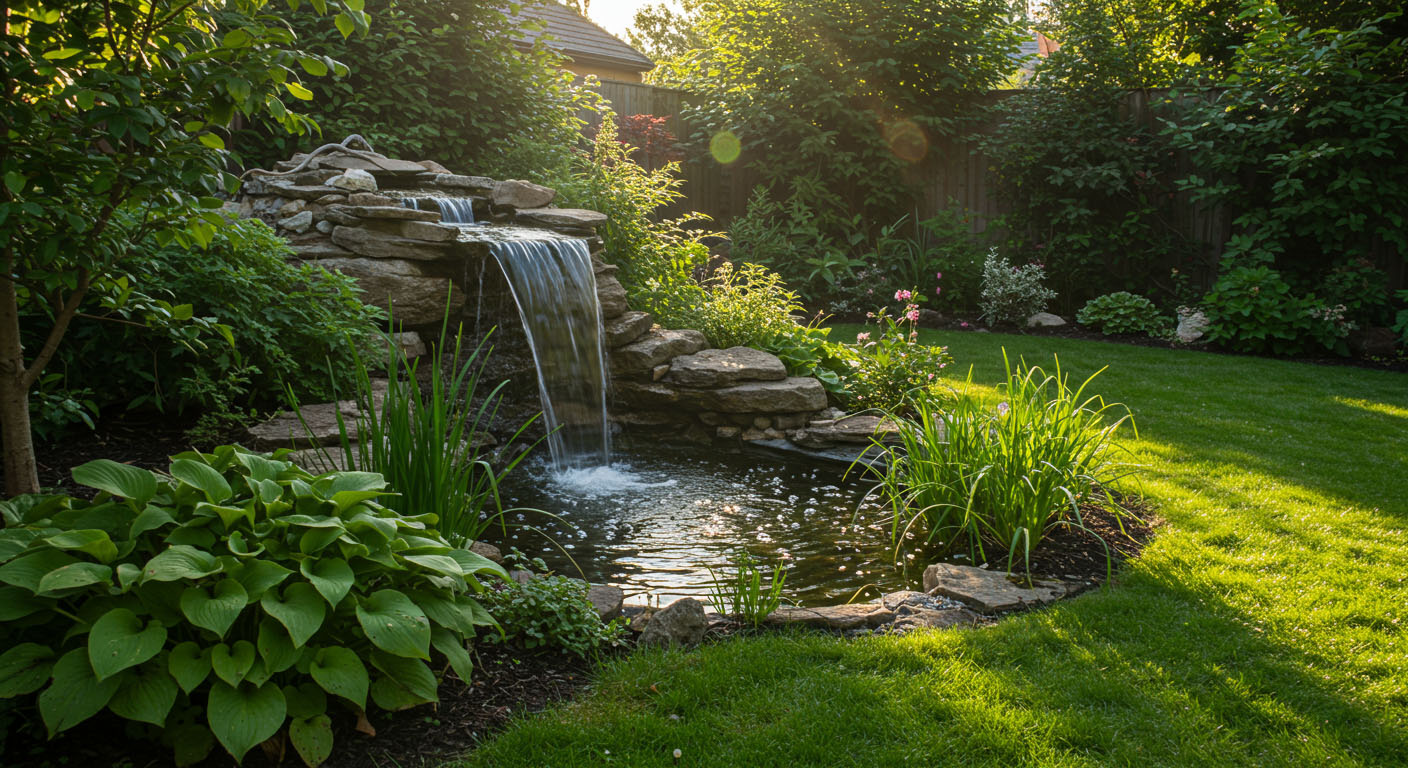
The most popular water feature in Tulsa right now. A pondless waterfall delivers the look and sound of cascading water without the standing water of a traditional pond. Water recirculates through a hidden underground reservoir, which means no open water to maintain, no mosquito concerns, and no safety risk for young children or pets. The water simply disappears into the rock bed at the base and gets pumped back up to the top.
Pondless waterfalls work well in almost any yard size, fit naturally into landscape designs, and are significantly lower maintenance than a full pond. They can be designed as a subtle trickle or a dramatic multi-tiered cascade depending on your space and preference.
Typical cost: $5,000 to $15,000 installed, depending on size, height, and material.
Bubbling Rock or Fountain Feature
The most compact and budget-friendly option. A bubbling rock, urn, or stacked stone fountain feature adds the sound of water to a small space — a patio corner, garden bed, or entryway — without requiring significant excavation or a large footprint. Water wells up from the top of a decorative stone or vessel and recirculates through a small underground basin.
These features install quickly, require minimal maintenance, and can be placed almost anywhere with access to a standard outdoor electrical outlet. They’re a strong choice for homeowners who want to add a water element without committing to a larger project.
Typical cost: $3,000 to $6,000 installed.
Koi Pond or Garden Pond
A full pond is the most immersive water feature you can build — and the most involved. A well-designed koi pond with proper filtration, aquatic plants, and fish becomes a living ecosystem that adds significant visual interest to a landscape. Tulsa homeowners who invest in a koi pond tend to become genuinely attached to the space; it’s the kind of feature that pulls you outside every day.
The trade-off is maintenance. Ponds require regular cleaning, filtration upkeep, and seasonal care. Oklahoma’s summer heat accelerates algae growth, which means filtration systems need to be sized properly for our climate. A properly designed pond with the right filtration is manageable — an undersized or poorly designed system becomes a headache quickly.
Typical cost: $8,000 to $25,000+, depending on size, depth, filtration, and features like waterfalls or lighting.
Stream or Creek Feature
A naturalistic stream connects two or more points in a landscape — often a waterfall at the top flowing into a pondless basin or small pond at the bottom. Stream features are ideal for sloped yards in south Tulsa where a grade change naturally lends itself to a water element. A well-built stream looks like it belongs there, as if it’s always been part of the landscape.
Streams require more planning than a standalone waterfall because the path, rock placement, and liner installation all affect how naturally the water moves. When done well, they’re among the most visually impressive features in residential landscaping.
Typical cost: $7,000 to $20,000 installed, depending on length and complexity.
Spillway or Water Wall
A modern alternative to naturalistic water features. Water flows over a clean edge — stone, concrete, or metal — and drops into a narrow basin below. Spillway and water wall designs suit contemporary outdoor spaces with clean lines and minimal landscaping. They’re often built into retaining walls, raised planters, or freestanding structures as an architectural element.
Typical cost: $4,000 to $12,000, depending on size and material.
What Drives the Cost of a Water Feature in Tulsa
- Size and complexity — A larger waterfall with multiple tiers, more rock work, and a longer stream costs significantly more than a simple single-drop feature. This is the biggest cost variable.
- Pump and filtration system — Undersizing the pump is the most common mistake in water feature installation. A properly sized pump for Oklahoma’s summer heat and algae conditions costs more upfront but saves significant maintenance time and money long-term.
- Rock and material selection — Natural boulders and ledge stone cost more than manufactured stone but create a more natural look. The quantity and size of rock used in a waterfall or stream is a major cost driver.
- Lighting — Underwater and landscape lighting adds $500 to $3,000 depending on the scope. Lighting transforms a water feature at night and extends the hours you actually enjoy it.
- Auto-fill systems — Tulsa’s summer heat causes significant evaporation. An automatic water level system that keeps the basin topped off without manual intervention adds $300 to $600 but removes a regular maintenance task.
- Excavation and site prep — Rocky soil, tight access, or significant grading on sloped Tulsa lots adds labor cost. South Tulsa’s hillier neighborhoods often require more excavation than flat north Tulsa lots.
Oklahoma-Specific Considerations
- Summer heat and evaporation — Tulsa summers are hard on water features. Evaporation in July and August can drop water levels several inches per week in a pond or open basin. Auto-fill systems and properly sized basins for pondless features minimize this issue. Any water feature installed in Tulsa should be designed with Oklahoma summer conditions in mind — not just average national specs.
- Algae and filtration — Oklahoma heat accelerates algae growth in ponds and slow-moving water. Proper UV filtration, aquatic plants, and beneficial bacteria treatments keep pond water clear. For pondless features, keeping the basin shaded and the pump running consistently prevents stagnation.
- Winter operation — Flowing water features can run year-round in most Oklahoma winters without issue. Moving water doesn’t freeze under normal Tulsa winter conditions. During hard freezes, some homeowners choose to shut down features temporarily to prevent pump damage, but Tulsa rarely sees extended freeze periods that require full winterization.
- Mosquitoes — Standing water is a mosquito concern in Oklahoma. Pondless features eliminate this entirely. Ponds with proper filtration and water movement are significantly less hospitable to mosquitoes than still water, but it’s a factor worth discussing with your contractor during design.
- Wildlife — Water features attract birds, dragonflies, and other beneficial wildlife almost immediately after installation. This is one of the most-mentioned benefits from Tulsa homeowners who add a water feature. It’s worth factoring into the design — placement near a seating area where you can watch and enjoy the activity maximizes the experience.
Which Water Feature Is Right for Your Yard?
- Small patio or courtyard → Bubbling rock or fountain feature. Low footprint, quick install, immediate impact.
- Average suburban yard → Pondless waterfall. The most versatile option. Fits most lot sizes, low maintenance, strong visual and audio impact.
- Sloped south Tulsa lot → Stream or waterfall. A grade change is an asset — use it. A naturalistic stream running down a slope looks intentional and integrates beautifully with the landscape.
- Larger landscaped yard → Koi pond or combined pond and waterfall. The most immersive option for homeowners who want a true destination in their backyard.
- Modern or contemporary patio → Spillway or water wall. Clean lines and architectural presence without the naturalistic rock work of a traditional waterfall.
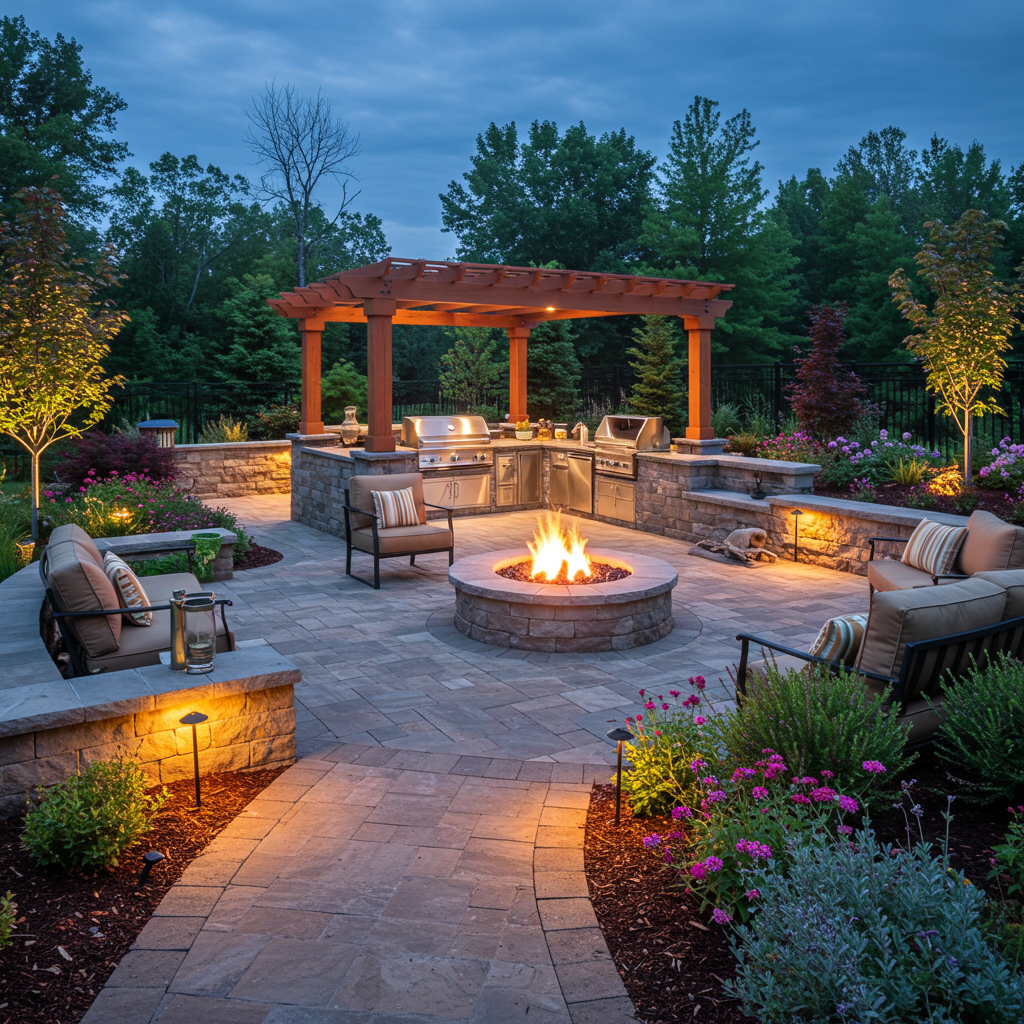
Water features also pair exceptionally well with other outdoor living elements. A pondless waterfall adjacent to a pergola or covered patio creates a layered outdoor room where the sound of water enhances every hour you spend outside. If you’re planning a larger backyard project, our post on how long outdoor living projects take to build is a helpful guide for sequencing the work. And if you’re still deciding which outdoor upgrade to prioritize first, our post on the best outdoor living upgrade to do first on a budget walks through how to think about that decision. For a national overview of outdoor water fountain installation costs, Angi’s outdoor water fountain installation cost guide is a useful benchmark reference.
Maintenance: What to Expect
Maintenance requirements vary significantly by feature type. Here’s a realistic picture of what each involves:
- Bubbling rock / fountain — Minimal. Clear debris from the basin monthly. Top off water level as needed (or install an auto-fill). Clean the pump filter 2–3 times per season. Total time: 30 minutes or less per month.
- Pondless waterfall — Low. Clear leaves and debris from the basin. Check pump operation periodically. Rinse the filter mat seasonally. Total time: a few hours per season.
- Stream — Low to moderate depending on tree coverage. Leaf and debris accumulation in the stream bed requires occasional clearing. Same pump and filter maintenance as a pondless system.
- Koi pond — Moderate. Weekly water quality checks, algae management, fish feeding, and regular filter cleaning. A full pond cleanout is recommended once per year. Professional maintenance contracts in Tulsa typically start around $225 per month for pond upkeep.
Frequently Asked Questions
Do water features add value to a Tulsa home?
A well-designed, professionally installed water feature adds meaningful curb appeal and contributes to overall outdoor living value. Buyers in Tulsa respond positively to finished outdoor spaces, and a water feature — particularly a pondless waterfall or koi pond integrated into the landscape — reads as a premium upgrade that sets a home apart.
How long does it take to install a water feature?
Most small to mid-sized water features — a bubbling rock, pondless waterfall, or simple stream — take two to five days to install. Larger koi ponds or multi-tiered systems with significant rock work may take one to two weeks. Read our full guide on how long outdoor living projects take to build for a complete timeline breakdown by project type.
Can water features run year-round in Oklahoma?
Yes, in most cases. Moving water doesn’t freeze under typical Tulsa winter conditions. During hard freezes, some homeowners shut features down temporarily to protect the pump, but full winterization is rarely necessary in our climate. Pondless features are the most winter-friendly because there’s no open water or fish to manage through cold snaps.
Do I need a permit for a water feature in Tulsa?
Most residential water features don’t require a permit in Tulsa. Larger pond installations or projects that involve significant excavation or electrical work may require one. Arrow Outdoor Living handles all permitting as part of every project.
What’s the difference between a pondless waterfall and a regular pond?
A pondless waterfall has no standing water — it recirculates through a hidden underground basin. There’s no open pond to maintain, no fish to care for, and no mosquito risk from standing water. A traditional pond holds water at the surface and can support fish and aquatic plants. Pondless systems are the lower-maintenance option; ponds offer a more immersive living ecosystem.
Ready to Add a Water Feature to Your Tulsa Backyard?
Arrow Outdoor Living designs and installs custom water features — pondless waterfalls, bubbling rocks, koi ponds, streams, and spillways — for Tulsa homeowners. If you’re not sure which option fits your yard, budget, and lifestyle, we’ll walk you through the choices during a free on-site consultation.