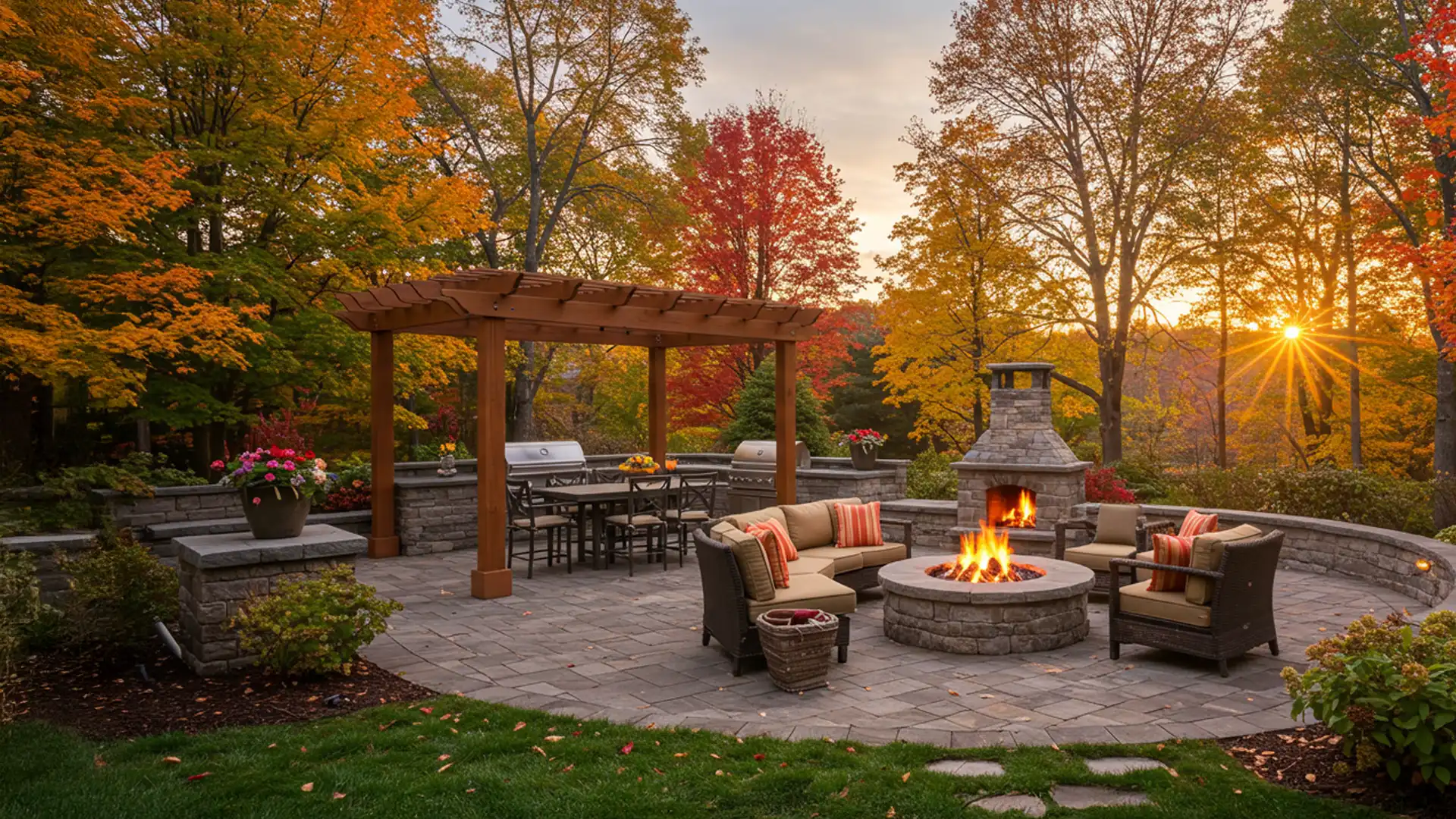
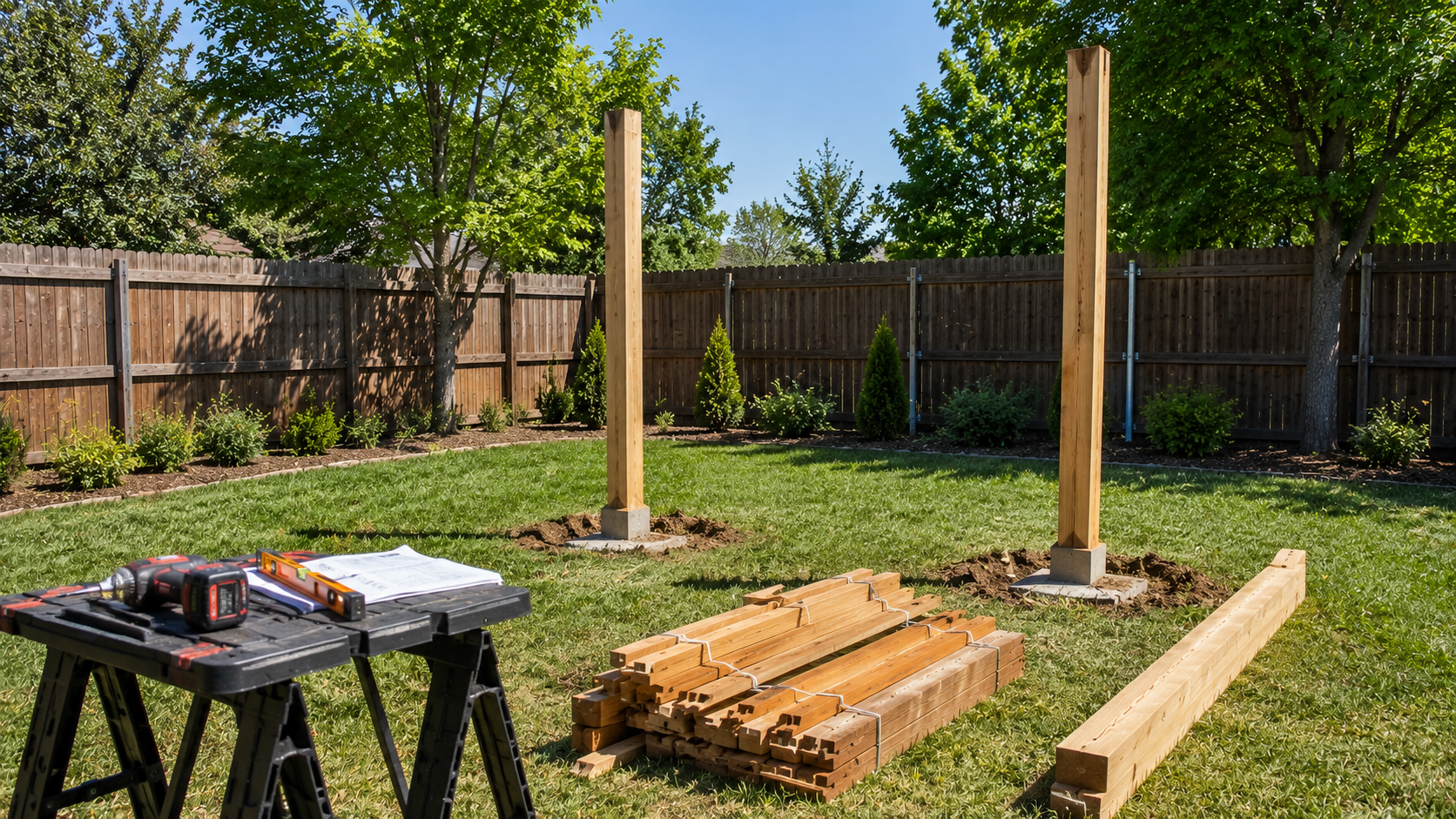
DIY pergola cost for a kit runs a fraction of what a custom build costs. Arrow Outdoor Living prices a basic custom cedar pergola at $6,000 to $12,000 installed, with larger and more detailed structures running higher. DIY wins on small kits over an existing slab. It stops winning as soon as the build gets tall, attached, or wired.
DIY pergola cost for a kit runs well below what a custom build costs, but the gap narrows once you add footings, tools, permits, and your own weekends. Arrow Outdoor Living prices a basic custom cedar pergola at $6,000 to $12,000 installed. That looks like an easy decision until you total up what the kit price leaves out.
Most articles you will find on this question come from companies that sell pergola kits. We build pergolas, so we have our own bias, and the honest answer is that DIY genuinely wins in some situations. Here is where the line actually falls.
What Does a DIY Pergola Cost?
A precut kit covers the structure only, and prices vary widely by size and material. Building from raw lumber instead puts you at $20 to $35 per square foot for pressure treated pine or $25 to $40 for cedar, before any hardware.
The kit price is the beginning of the number, not the end. Plan for these on top:
- Concrete and footings. Oklahoma clay means footings have to sit deep and level. This is the step DIY builds get wrong most often.
- Tool rental. An auger, a hammer drill, or a post level if you do not already own them.
- Permits. $50 to $200, and they apply whether or not you hire someone.
- Stain and sealer. Wood kits arrive raw. Oklahoma sun makes finishing a first-year job, not a someday job.
- A helper. Not a line item, but you will need one.
Compare against what the professional number covers. Labor typically runs 20 to 25 percent of a project total, at $50 to $120 per hour, and a standard pergola takes a trained crew 8 to 16 hours. For a full breakdown of the professional side, see our guide to pergola cost in 2026.
Is It Cheaper to Build Your Own Pergola or Buy a Kit?
A kit costs more in materials and far less in time, while building from raw lumber costs less in materials and much more in skill. Most homeowners come out ahead with a kit.
Raw lumber makes sense when you want a size or design no kit offers, and when you already own a miter saw, a post level, and the ability to cut compound angles on rafter tails. Without those, the savings evaporate into wasted lumber.
Kits solve the hard parts in advance. Someone else calculated the spans, precut the joinery, and supplied hardware sized to the load. You supply assembly.
The third option deserves mention. Buying a kit and paying a contractor to install it costs less than a fully custom build and removes the risk from the footing and framing steps. Installation cost depends on the kit and the site, but it typically runs less than a fully custom build and removes the risk from the footing and framing steps.
What Does DIY Pergola Cost Leave Out?
Time and risk, and both carry a real price. A kit that takes a trained crew one day takes an experienced DIYer with a helper one to two days, and longer for a first attempt.
The risks are specific:
- Footings set wrong. Shallow or unlevel footings cause the structure to lean or fail. Fixing this after the fact means taking the pergola apart.
- Voided warranties. Manufacturers void coverage when assembly does not follow their instructions.
- Missed permits. Building without one can mean removal orders or problems at resale.
- Expensive mistakes. A miscut beam on a precut kit means ordering a replacement part and waiting.
Oklahoma adds one more. Spring wind loads a freestanding structure from every direction, and a kit engineered for a mild climate behaves differently here. Anchoring matters more in this state than the instruction sheet assumes.
Do You Need a Permit to Build a Pergola Yourself?
Yes, in most cases, and doing the work yourself changes nothing about that requirement. Permits attach to the structure, not to who builds it.
Tulsa lists detached accessory buildings under 200 square feet under a zoning clearance only permit rather than a full building permit. Whether an open pergola falls in that category depends on the structure, so confirm with the permit office before you buy materials. For scale, a 14×14 pergola comes in at 196 square feet.
Adding electrical changes the picture. Tulsa gives the example of a deck built with a ceiling fan and a sink, which needs building, electrical, and plumbing permits. Wiring is what adds the electrical permit, and string lights and fans are the most common pergola upgrade there is.
Requirements differ across Tulsa, Broken Arrow, Bixby, Jenks, and Owasso, so check your own city before you buy materials. Tulsa permits expire after 180 days without progress, which matters if a weekend project stretches into a season.
Can One Person Build a Pergola Alone?
No, and this is the practical detail that changes most plans. Setting posts plumb while concrete cures takes two sets of hands, and lifting beams overhead alone is how people get hurt.
The steps that genuinely require a second person:
- Holding posts plumb while footings set
- Lifting and seating header beams
- Positioning rafters across a span
- Checking level across the full structure
Smaller aluminum or vinyl kits come closer to a one-person job. Large cedar kits do not. Budget a full weekend with a helper who can commit to both days, because a half-finished pergola sitting through a rainstorm creates its own problems.
When Does DIY Actually Make Sense?
DIY makes sense when the pergola is small, freestanding, sits on an existing slab or deck, and carries no electrical. That combination removes almost everything that goes wrong.
Good DIY candidates:
- A 10×10 or 12×12 kit on an existing concrete patio
- Freestanding placement well away from the house
- No wiring, no fans, no attached roofline
- A helper available and basic tools already owned
Hire out when:
- The pergola attaches to your house, since tying into a roofline safely takes experience
- You want electrical for lighting or fans
- The ground slopes or drains poorly
- You want a size or design no kit sells
- You want a workmanship warranty behind the structure
Attached builds deserve extra thought. They cost less in materials because they need fewer posts, and they cost more in skill because the connection to your home has to shed water and carry load correctly. Our comparison of attached and freestanding pergola cost covers that tradeoff.
Still Deciding?
The right answer depends on your yard, your tools, and how much of your weekend you want back. A small kit on flat ground is a satisfying project. A custom structure tied into your house is a different job entirely.
Arrow Outdoor Living has built outdoor structures across the Tulsa metro since 2021 with in-house crews rather than subcontractors. We serve Tulsa, Broken Arrow, Bixby, Jenks, Owasso, and the surrounding communities, and we will tell you honestly if your project is one you could handle yourself. You can see build details and pricing on our custom pergolas and pavilions page.
Request a free on site estimate from Arrow Outdoor Living and compare a real number against your kit price.