How Much Does a Pergola Cost in 2026? The Complete Pricing Guide
How much does a pergola cost in 2026? Most homeowners pay between $2,100 and $6,400 for a professionally installed pergola. The average cost is around $4,200. However, prices can range from $1,000 for a basic DIY kit to over $50,000 for a large motorized louvered system.
Your final price depends on the size, materials, design style, and where you live. In this guide, we break down everything that affects pergola pricing so you can plan your backyard project with confidence.
Average Pergola Cost in 2026
Here’s what most homeowners spend on a new pergola this year:
- National Average: $4,200
- Typical Range: $2,100 – $6,400
- Budget Projects: $1,000 – $2,000
- High-End Custom Builds: $8,000 – $15,000+
- Motorized Louvered Pergolas: $15,000 – $50,000+
Most pergolas cost between $20 and $60 per square foot when you factor in both materials and labor. A standard 10×10 pergola runs about $2,000 to $6,000 installed. A larger 12×12 structure typically costs $2,900 to $8,600.
Pergola Cost by Size
Size is one of the biggest factors in your total price. Larger pergolas need more materials and take longer to build. Here’s what to expect based on common dimensions:
- 8×8 pergola: $1,280 – $3,840
- 10×10 pergola: $2,000 – $6,000
- 10×12 pergola: $2,400 – $7,200
- 12×12 pergola: $2,880 – $8,640
- 12×16 pergola: $3,840 – $11,520
- 14×14 pergola: $3,920 – $11,760
- 16×20 pergola: $6,400 – $19,200
Before you decide on a size, think about how you’ll use the space. A 10×10 pergola works well for a small seating area. If you want to cover an outdoor dining table or kitchen, consider a 12×14 or larger.
Pergola Cost by Material
The material you choose affects both the upfront cost and long-term maintenance. Each option has pros and cons worth considering.
Wood Pergolas
Wood remains the most popular choice for its natural beauty and classic look.
- Pressure-Treated Pine: $20 – $35 per square foot. Most affordable wood option. Resists rot and insects but needs regular staining or sealing.
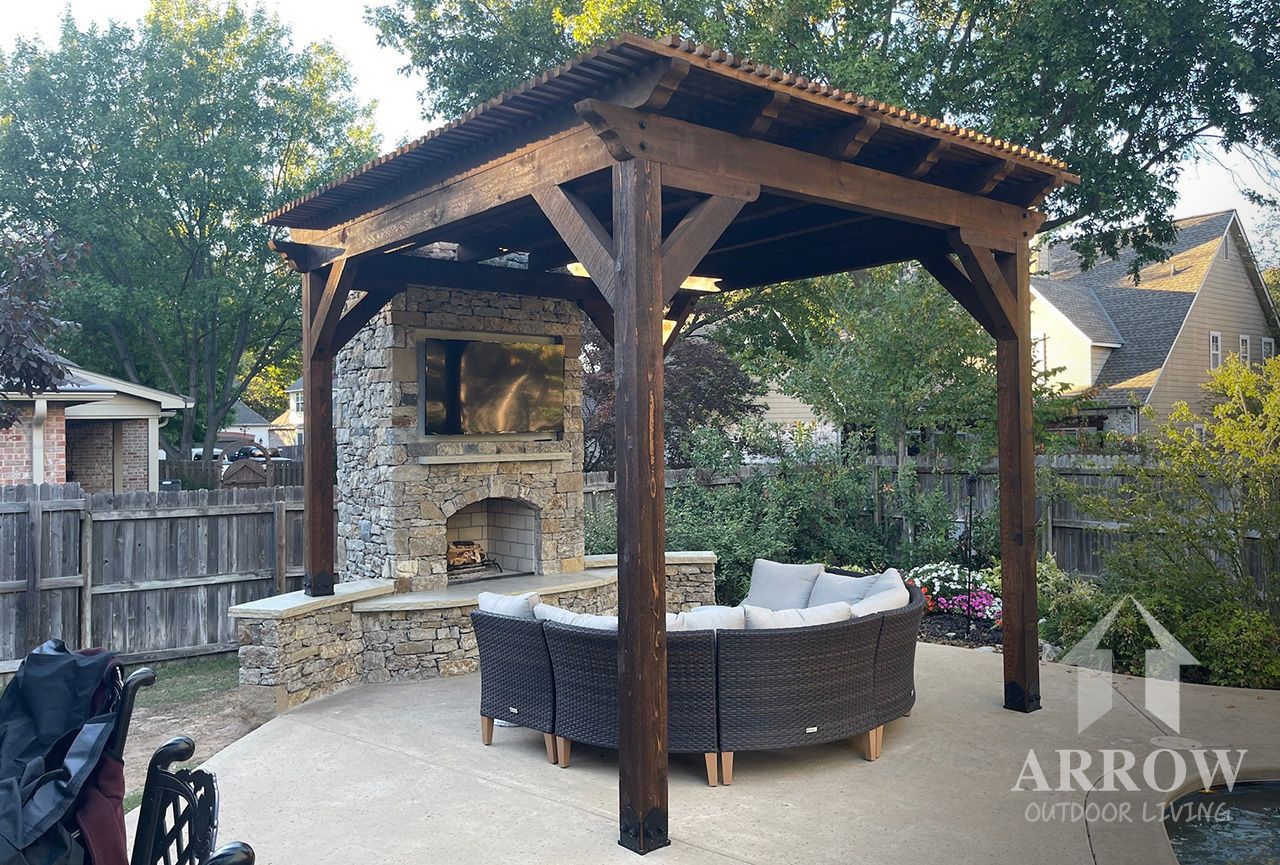
- Cedar: $25 – $40 per square foot. Naturally resistant to decay and insects. Beautiful grain but may fade over time without maintenance.
- Redwood: $40 – $55 per square foot. Premium look with excellent durability. Requires ethical sourcing, which limits availability.
- Exotic Hardwoods (Teak, Ipe): $50 – $100+ per square foot. Extremely durable and beautiful. Highest upfront cost but can last 25+ years.
Cedar is often the sweet spot for homeowners who want natural wood without breaking the bank. It holds up well in most climates and develops an attractive silver patina if left unstained.
Aluminum Pergolas
Aluminum costs $10 – $30 per square foot. It’s lightweight, rust-resistant, and requires almost no maintenance. This makes it a great choice for humid climates or homes near water.
The downside? Aluminum pergolas don’t have the warm, natural look of wood. However, many manufacturers now offer powder-coated finishes that mimic wood grain.
Vinyl Pergolas
Vinyl also runs $10 – $30 per square foot. Like aluminum, it’s low-maintenance and won’t rot, warp, or attract insects.
Vinyl works well in areas with intense sun because it’s UV-resistant. However, it can look less authentic than wood, and color options are limited.
Fiberglass Pergolas
Fiberglass is the most expensive material at $50 – $60 per square foot. It’s also the strongest and most durable option.
This material handles temperature swings well, making it ideal for regions with hot summers and cold winters. Fiberglass is lightweight enough to attach to existing structures without heavy reinforcement.
What’s Included in a Pergola Quote?
When you get estimates from contractors, make sure you understand what’s included. A complete pergola installation typically covers:
- All lumber or structural materials
- Hardware, fasteners, and post brackets
- Labor for assembly and installation
- Concrete footings or post anchors
- Basic finishing (stain, seal, or paint)
- Cleanup and debris removal
Some quotes may not include permits, electrical work, or site preparation. Always ask what’s covered before signing a contract.
Extra Features That Increase Pergola Costs
A basic pergola with an open-slat roof is just the starting point. Adding features can significantly increase your investment.
Roofing Options
- Shade sails or fabric covers: $50 – $300
- Polycarbonate panels: $500 – $2,000
- Solid roof (shingles or metal): $1,500 – $5,000
- Retractable canopy: $1,000 – $5,000
- Motorized louvered roof: $5,000 – $25,000+
Electrical and Lighting
Adding electrical wiring costs $500 – $2,000 on average. This allows you to install ceiling fans, string lights, recessed lighting, or outdoor speakers. Always hire a licensed electrician for this work.
Other Popular Add-Ons
- Privacy curtains or screens: $200 – $1,000
- Built-in planters: $150 – $500
- Ceiling fan: $150 – $500
- Heaters or misting systems: $500 – $3,000
Louvered and Motorized Pergolas: The 2026 Trend
Motorized pergolas with adjustable louvers are one of the hottest outdoor living trends right now. These high-tech structures let you control sun, shade, and rain protection with the push of a button.
Expect to pay $60 – $200 per square foot for a motorized louvered pergola. A 12×20 StruXure or similar premium system typically costs $36,000 – $48,000 fully installed.
These systems often include:
- 170-degree adjustable louvers
- Rain sensors that automatically close the roof
- Wi-Fi connectivity and app control
- Integrated LED lighting
- Gutter systems for water management
While the price tag is steep, motorized pergolas offer year-round usability that standard pergolas can’t match. If you’re curious about what a motorized pergola might cost for your specific situation, our Tulsa motorized pergola pricing guide breaks it all down.
Attached vs. Freestanding Pergolas
Where you place your pergola affects the total cost.
Attached pergolas connect to your home or another structure. They typically cost less because they only need two posts instead of four. However, installation is more complex. The contractor must tie into your roofline or wall safely.
Freestanding pergolas stand on their own with four or more posts. They offer more flexibility in placement but require additional materials and deeper footings.
In most cases, attached pergolas save $500 – $1,500 on materials. But if your home needs reinforcement to support the structure, the savings disappear.
Labor Costs for Pergola Installation
Labor typically accounts for 20-25% of your total project cost. Most contractors charge $50 – $120 per hour, and a standard pergola takes 8 – 16 hours to build.
Expect to pay $500 – $1,500 in labor for a basic prefab kit installation. Custom pergola builds in Tulsa run $2,000 – $4,000 or more in labor depending on the complexity.
Factors that increase labor costs include:
- Difficult site access
- Sloped or uneven ground
- Attaching to an existing structure
- Custom designs with curves or special details
- Integrating electrical or plumbing
DIY Pergola Kits vs. Professional Installation
Can you save money building a pergola yourself? Sometimes, but it’s not always the best choice.
DIY pergola kits cost $700 – $5,000 depending on size and materials. Assembly typically takes one to two days for an experienced DIYer with a helper.
However, DIY has risks:
- Improper footings can cause the structure to lean or fail
- You may void warranties with incorrect assembly
- Permits are still required in many areas
- Mistakes can be expensive to fix
Professional installation ensures your pergola is safe, level, and built to last. In the Tulsa metro Arrow Outdoor Living handles desing, permitting, and construction with in-house crews. According to HomeGuide, most homeowners who try DIY end up spending more to fix errors than they would have paid a pro from the start.
Do You Need a Permit for a Pergola?
Permit requirements vary by location. Many cities don’t require permits for freestanding pergolas under 200 square feet. However, you may need one if:
- The pergola attaches to your home
- It’s taller than 10-12 feet
- You’re adding electrical wiring
- Your property is in an HOA
Permit fees typically range from $50 – $200. Your contractor should handle the permit process as part of the project.
How Climate Affects Pergola Costs
Where you live impacts both material choices and construction requirements.
In areas with freeze-thaw cycles, footings must extend below the frost line. This adds $200 – $500 to concrete costs. High-wind regions may require heavier posts and hurricane-rated hardware.
Humid climates favor rot-resistant materials like cedar, aluminum, or vinyl. Hot, sunny areas benefit from UV-resistant finishes and covered roof options.
Local material availability also matters. If you want redwood but live far from the West Coast, shipping costs add up quickly.
Best Time of Year to Build a Pergola
Contractors are busiest in spring and summer. Scheduling your project in fall or winter often means:
- Shorter wait times for estimates
- More flexible scheduling
- Potential off-season discounts
- Your pergola is ready when warm weather arrives
Many homeowners plan their pergola project in winter and schedule construction for early spring.
Does a Pergola Add Home Value?
Yes, a well-built pergola can increase your home’s value and curb appeal. Outdoor living spaces are consistently ranked among the most desirable home features.
The return on investment depends on:
- Quality of materials and construction
- How well it integrates with your landscape
- Local real estate market preferences
A pergola won’t add dollar-for-dollar value, but it can make your home more attractive to buyers and help it sell faster.
Questions to Ask Your Pergola Contractor
Before hiring a contractor, get answers to these important questions:
- How long have you been building pergolas?
- Can I see photos of recent projects?
- What materials do you recommend for my climate?
- Is the quote all-inclusive, or are there additional fees?
- Do you handle permits?
- What warranty do you offer on labor and materials?
- How long will the project take from start to finish?
In the Tulsa metro, Arrow Outdoor Living answers all of these upfront — see custom pergolas and pavilions in Tulsa for published pricing and build details.
Get at least three written estimates before making a decision. The lowest price isn’t always the best value.
Ready to Build Your Dream Pergola?
A pergola transforms your backyard into a comfortable outdoor living space you’ll enjoy for years. Whether you want a simple shade structure or a fully loaded motorized system, understanding the costs helps you budget wisely.
At Arrow Outdoor Living, known around Tulsa as “The Tulsa Pergola Builder,” we specialize in custom cedar pergolas, pavilions, and covered patio structures. Our 5-star rated team handles everything from design to installation. We serve Tulsa, Broken Arrow, Bixby, Jenks, Owasso, and surrounding areas.
Ready to get started? Contact Arrow Outdoor Living for a free estimate and let’s bring your outdoor vision to life.