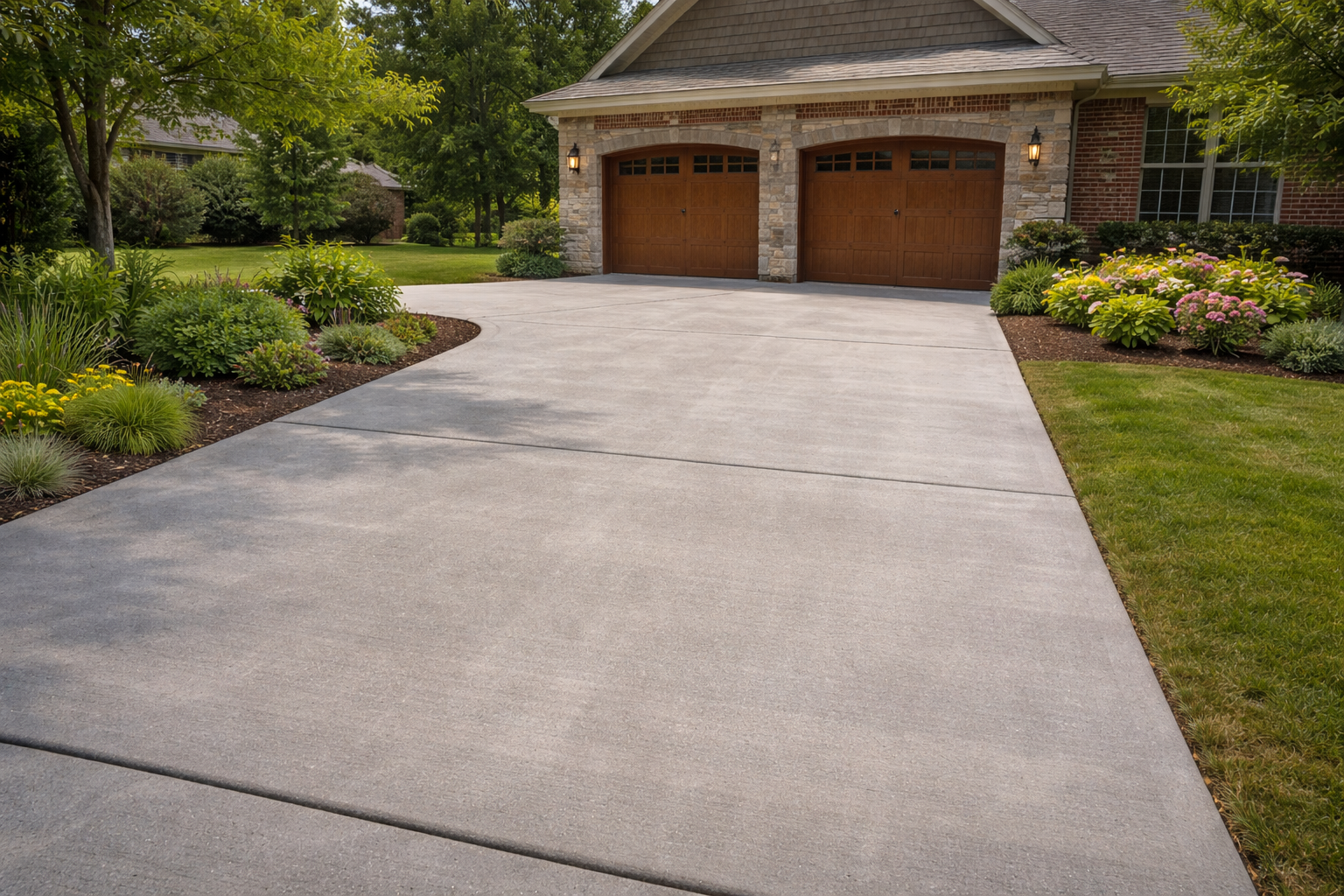
How much does a concrete driveway cost in Tulsa? Most homeowners pay between $6 and $12 per square foot for a standard installation, which puts a typical single-car driveway in the $3,600–$7,200 range and a two-car driveway between $6,500 and $14,000. Stamped or colored finishes push costs higher, while a basic brushed finish stays at the lower end of that range.
Concrete is one of the most durable driveway materials available — and in Tulsa’s climate, it holds up well against the heat, freeze-thaw cycles, and heavy rain that asphalt and gravel struggle with over time. Here’s a full breakdown of what drives the price so you can budget with confidence before getting quotes.
Concrete Driveway Cost by Size in Tulsa
Size is the biggest single factor in your total project cost. Here’s what you can expect to pay for common driveway sizes at Tulsa’s average rate of $6–$12 per square foot:
- Single-car driveway (12 x 50 ft / 600 sq ft) — $3,600 to $7,200
- Standard two-car driveway (16 x 40 ft / 640 sq ft) — $3,840 to $7,680
- Wide two-car driveway (24 x 40 ft / 960 sq ft) — $5,760 to $11,520
- Long two-car driveway (24 x 50 ft / 1,200 sq ft) — $7,200 to $14,400
These figures reflect standard brushed concrete with basic site prep. Add-ons like demolition, stamping, or reinforcement will increase the total — those are covered below. For a national benchmark, Angi’s concrete driveway cost guide puts the average U.S. range at $8–$18 per square foot, which shows how much Tulsa’s lower labor rates work in your favor.
What’s Included in That Price
A standard concrete driveway installation in Tulsa typically covers the following:
- Grading and subbase preparation — The soil is graded, compacted, and a gravel base layer is added. This is essential for preventing cracking and settling, especially in Tulsa’s clay-heavy soil.
- Forming — Wood or metal forms are set to define the edges and thickness of the pour.
- Concrete pour — Most residential driveways in Tulsa use 4,000 PSI concrete at 4–5 inches thick. Homes with trucks, RVs, or heavy vehicles may need 6-inch slabs.
- Finishing — A standard broom or brushed finish is included. Decorative finishes cost extra.
- Control joints — Saw cuts are made after the pour to control where cracking occurs as the concrete cures.
- Basic cleanup and haul-off — Removal of forms and leftover materials.
Additional Cost Factors
Demolition of an Existing Driveway
If you’re replacing an old concrete or asphalt driveway, demolition adds $1–$3 per square foot to the project. For a 640-square-foot driveway, that’s $640–$1,920 on top of the installation cost. Reinforced concrete with rebar runs toward the higher end because it takes more labor and equipment to break up and haul away.
Stamped or Decorative Concrete
Stamped concrete patterns — such as slate, cobblestone, or brick — add $4–$8 per square foot over a standard finish. Integral color or surface staining adds $2–$4 per square foot. For homeowners who want a driveway that complements the look of a custom patio or outdoor living space, decorative concrete is worth serious consideration. Our post on stamped concrete vs. pavers for Tulsa backyards covers how these finishes compare in cost and durability.
Reinforcement (Rebar vs. Wire Mesh)
Wire mesh is standard for most residential driveways and is typically included in the base price. Upgrading to rebar adds $1–$2 per square foot but provides significantly more crack resistance. Tulsa’s clay soil expands and contracts with moisture, which puts stress on concrete slabs — rebar is a worthwhile upgrade for most installs here.
Driveway Apron
The apron is the section where your driveway meets the public street. A new apron costs $7–$12 per square foot and is often required when installing a new driveway. The City of Tulsa may cover apron replacement in some cases — your contractor can advise on this during the estimate.
Permits
New driveway installations in Tulsa typically require a permit, which runs around $100. Replacement projects may not require one if you’re pouring over an existing footprint. Arrow handles permitting as part of every project.
Site Challenges
Sloped lots, poor drainage, tree roots, or difficult access can all increase labor costs. A flat, straightforward pour stays at the low end of the price range. Complex grading or drainage work pushes costs higher.
Concrete vs. Asphalt vs. Pavers: Which Is Best for Tulsa?
Concrete is the most common choice for Tulsa driveways — and for good reason. Here’s a quick comparison:
- Concrete — $6–$12 per sq ft installed. Lasts 30–50 years with proper sealing. Handles heat well, holds up against freeze-thaw cycles, and requires minimal maintenance. Best long-term value for most homeowners.
- Asphalt — $3–$7 per sq ft installed. Lower upfront cost but requires resealing every 3–5 years and full replacement in 15–20 years. Softens in extreme Oklahoma heat, which can cause rutting in high-traffic areas.
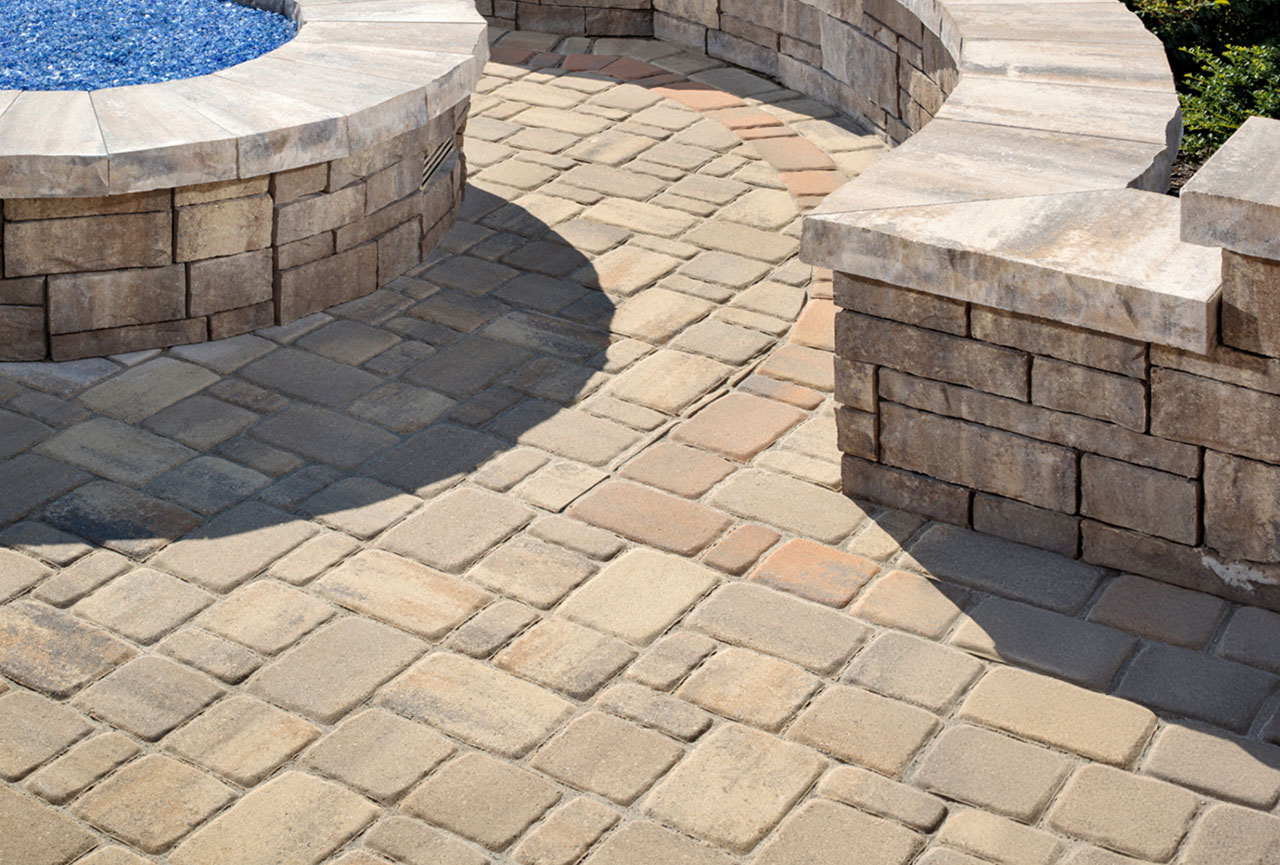
- Pavers — $10–$25 per sq ft installed. Highest upfront cost but allows for easy repair of individual sections, strong visual appeal, and excellent drainage. Best suited for shorter driveways or decorative entry areas.
- Gravel — $1–$3 per sq ft. Lowest cost but requires ongoing maintenance, spreads over time, and doesn’t work well on slopes common in Tulsa’s hillier neighborhoods.
For most Tulsa homeowners, poured concrete offers the best combination of durability, low maintenance, and long-term value. If curb appeal is the priority and budget allows, pavers or stamped concrete finishes deliver a more custom look.
How Long Does a Concrete Driveway Last in Tulsa?
A properly installed concrete driveway in Tulsa typically lasts 30–50 years. Two factors shorten that lifespan more than anything else: poor subbase prep and skipping the sealer. Tulsa’s clay soil shifts with moisture, so a well-compacted gravel base is critical. Sealing every 3–5 years protects against water intrusion, staining, and the freeze-thaw cracking that Oklahoma winters can cause.
Curing time also matters. New concrete needs 24–48 hours before foot traffic and at least 7 days before driving on it. Full strength is reached around 28 days. Rushing this process — especially in Tulsa’s summer heat — is one of the most common causes of premature cracking.
Tulsa-Specific Considerations
- Clay soil — Tulsa’s soil expands when wet and contracts when dry. Concrete slabs poured directly on poorly prepared clay will crack and settle. A crushed stone subbase is not optional here — it’s the difference between a driveway that lasts 40 years and one that needs repairs in 10.
- Heat curing — Summer pours need to be managed carefully. Concrete that dries too fast in high heat cures unevenly, which leads to surface cracking. Experienced local contractors know how to manage this with curing blankets and proper timing.
- Freeze-thaw cycles — Tulsa gets enough freezing temperatures to cause water infiltration and cracking if concrete isn’t sealed. Air-entrained concrete helps, and sealing every few years extends the life of the slab significantly.
- Drainage — Flat driveways with no pitch can pool water against your foundation. Good drainage design — including a slight slope away from the house — is something to discuss with your contractor during planning.
Is a New Concrete Driveway Worth It?
Yes — for most Tulsa homeowners, a concrete driveway is one of the better home improvement investments you can make. It adds immediate curb appeal, requires very little maintenance over its lifespan, and holds up to daily use for decades. A new driveway can increase home value by up to 10%, and concrete specifically is a selling point buyers recognize because they understand what it means for long-term upkeep.
If you’re already planning an outdoor living project — a patio, pergola, or outdoor kitchen — combining it with a driveway replacement is a smart way to consolidate contractor time and potentially reduce costs. Our post on how long outdoor living projects take to build can help you plan the timeline if you’re thinking about tackling multiple upgrades at once.
Our concrete installation crews in Tulsa handle driveways, patios, and flatwork on the same job, so you are not coordinating three contractors around one backyard.
Frequently Asked Questions
How thick should a concrete driveway be in Tulsa?
Four to five inches is standard for most residential driveways handling passenger vehicles. If you park trucks, RVs, or other heavy equipment on your driveway, go with a 6-inch slab. In Tulsa’s clay soil conditions, erring toward the thicker end of that range is worth the modest additional cost.
Do I need a permit for a concrete driveway in Tulsa?
New driveway installations typically require a permit in Tulsa, which costs around $100. Straight replacements on the same footprint may not require one. Arrow handles permitting on every project, so you don’t have to figure that out on your own.
How soon can I drive on a new concrete driveway?
Wait at least 7 days before driving on new concrete. Foot traffic is fine after 24–48 hours. Full curing takes about 28 days. In hot Oklahoma summers, patience pays off — driving on concrete before it fully cures is one of the most common causes of surface damage.
How does concrete compare to pavers for a Tulsa driveway?
Concrete is less expensive upfront and requires less maintenance long-term. Pavers cost more but allow individual sections to be replaced without disturbing the whole driveway, and they offer more design flexibility. For a deeper comparison, our guide to stamped concrete vs. pavers for Tulsa backyards covers how both options perform in our climate.
What causes concrete driveways to crack in Tulsa?
The most common causes are poor subbase preparation, thin pours, and skipping the sealer. Tulsa’s clay soil and heat cycles put real stress on concrete. A properly prepared subbase, correctly placed control joints, and regular sealing prevent most cracking issues.
Ready to Get a Quote?
Arrow Outdoor Living installs concrete driveways, patios, and custom outdoor surfaces for Tulsa homeowners. If you’re planning a new driveway or replacing an existing one, we’ll walk you through material options, design choices, and real local pricing during a free on-site consultation.