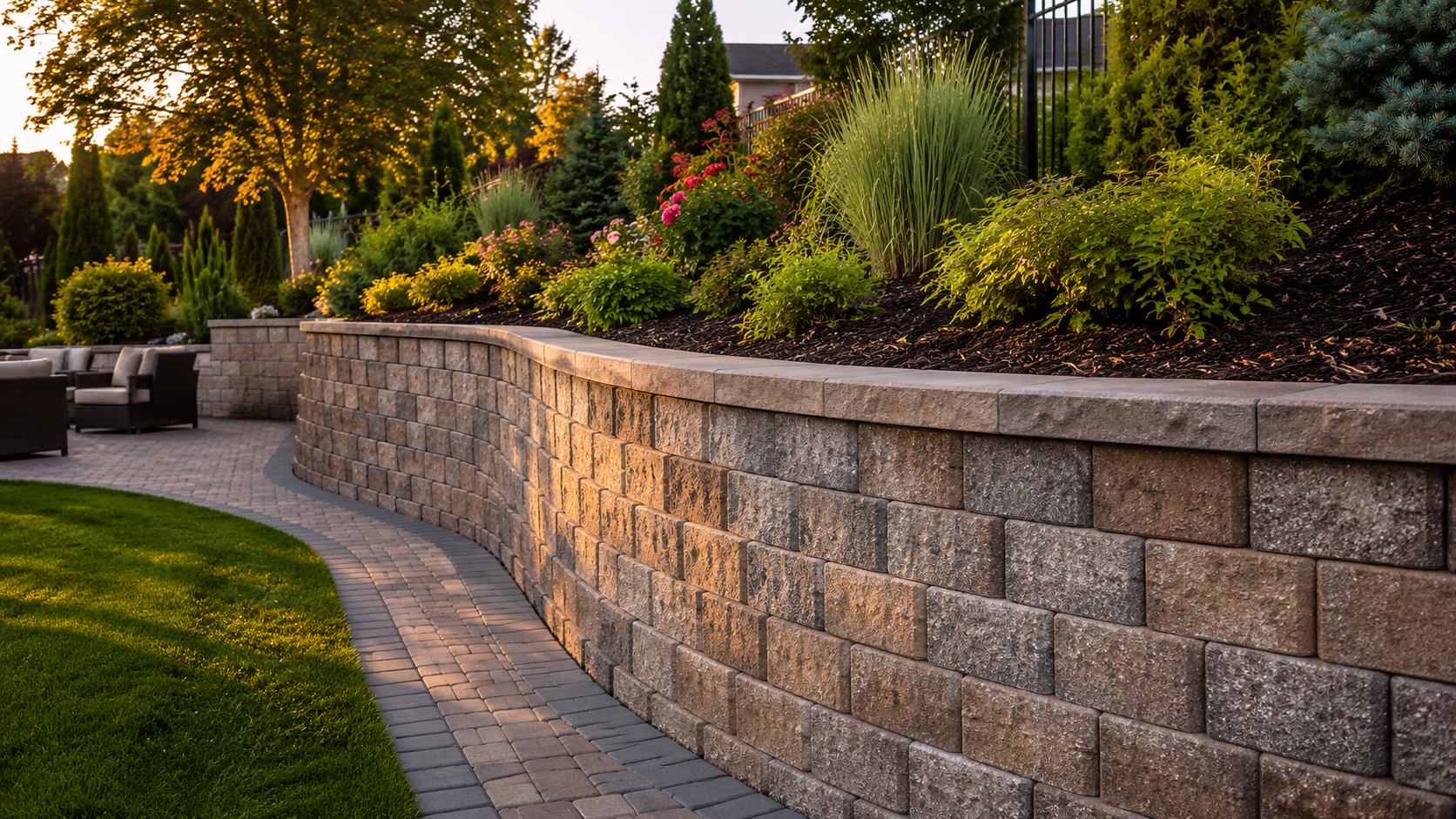
A retaining wall in Tulsa makes sense when a slope, erosion, or drainage problem eats into your usable yard. Watch for warning signs like leaning, bowing, cracking, and separating blocks, because they point to a failing wall. Most Tulsa retaining walls fail from poor drainage in our expansive clay soil, so a wall that lasts starts with drainage, a solid base, and a build made for Oklahoma conditions.
A retaining wall in Tulsa does one important job: it holds back soil so a slope becomes usable, stable ground. If your yard has a hillside eating into your space, water washing soil toward the house, or a slope you cannot mow or plant, a retaining wall is often the answer. This guide covers when you need one, how to spot a wall that is failing, why so many walls fail in Oklahoma’s clay soil, and how to build one that holds up for decades.
Arrow Outdoor Living has built and repaired retaining walls across the Tulsa metro for 5 years, and our crews see the same failures over and over. Get the soil and water right, and a wall lasts for decades.
Do You Need a Retaining Wall?
You need a retaining wall when soil on a slope keeps moving, eroding, or limiting how you use your yard. Here are the clearest signs a Tulsa yard needs one:
- Your lot has a slope or grade change that wastes space you could otherwise use.
- Rain washes soil, mulch, or gravel downhill after every storm.
- Water runs toward your home or foundation instead of away from it.
- A hillside near your patio, driveway, or pool keeps sliding or slumping.
- You want a flat, level area for a patio, outdoor kitchen, or garden on uneven ground.
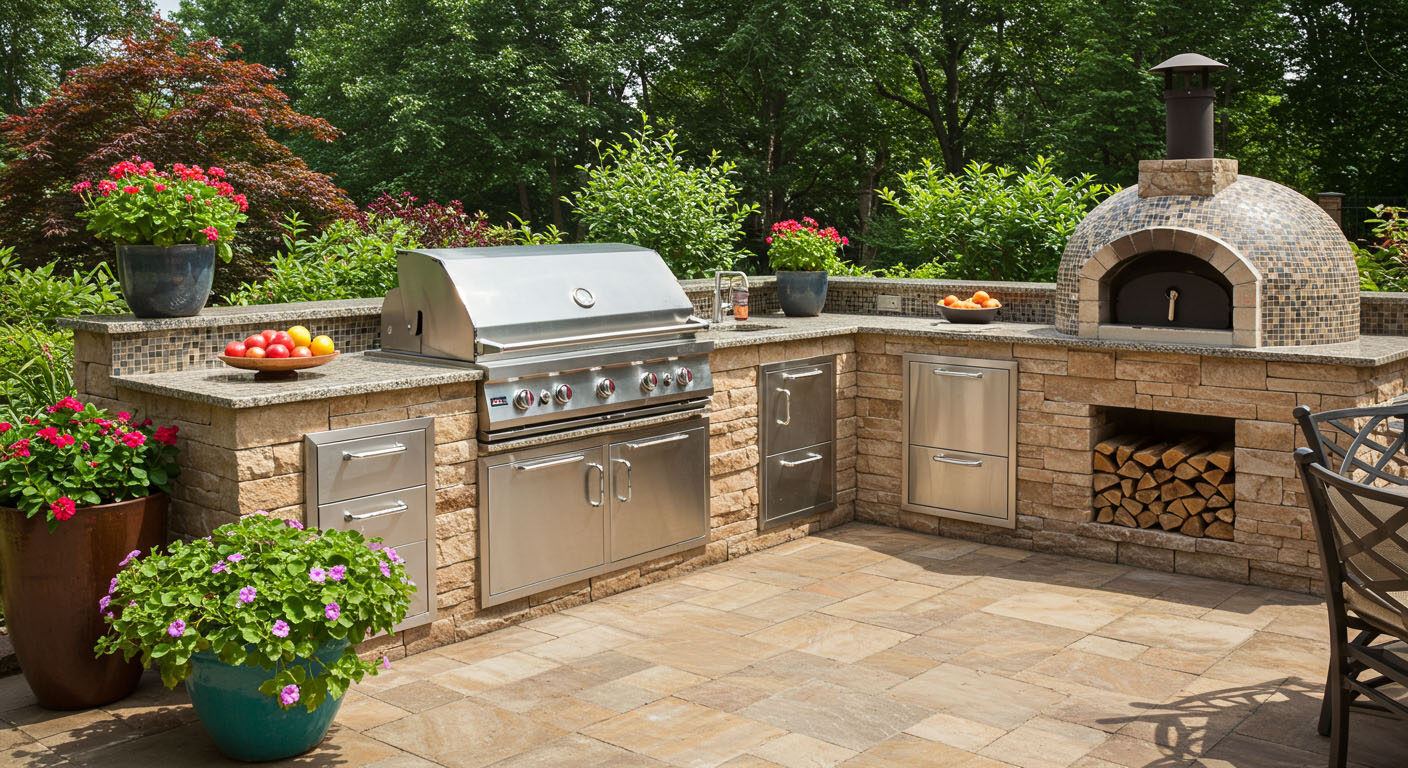
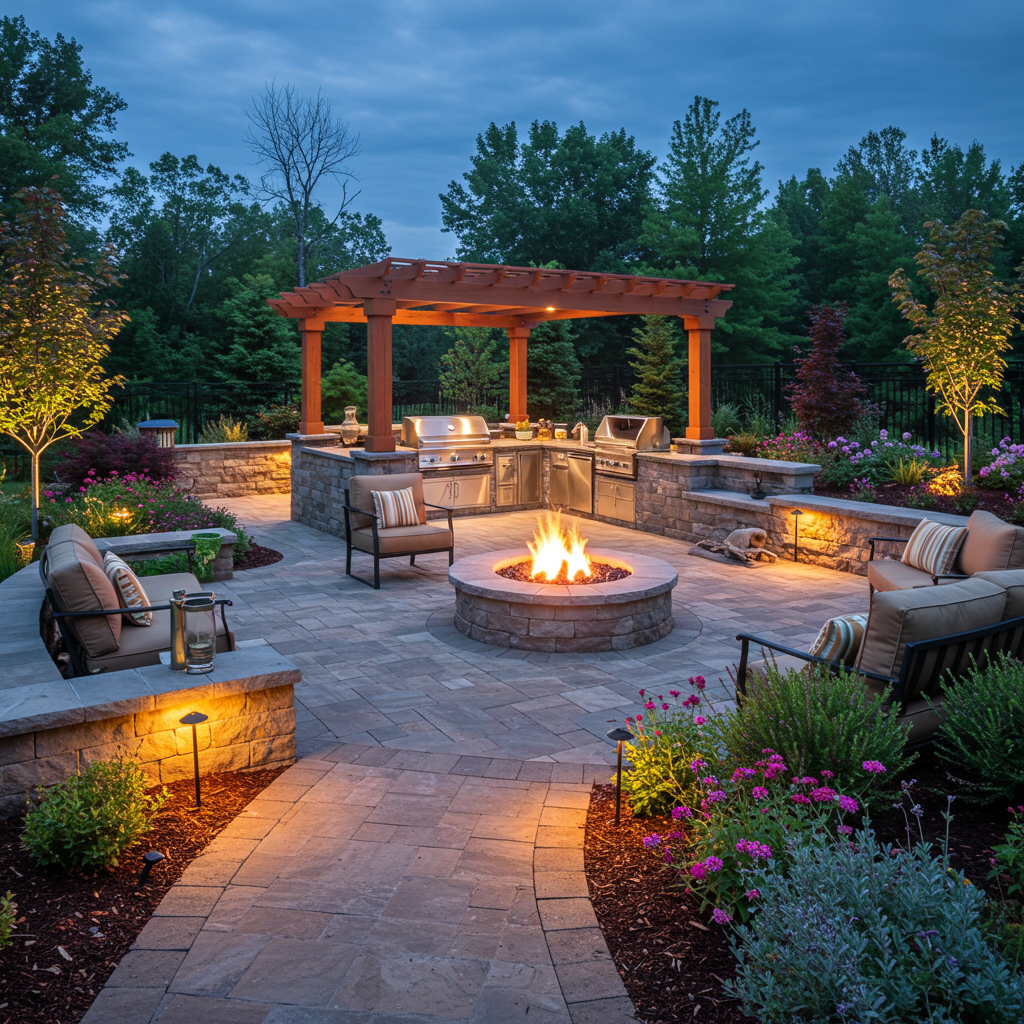
Sloped lots are common in South Tulsa, Jenks, and Bixby, where grade changes turn into wasted space. A well-built retaining wall turns that slope into a level, usable area and stops erosion at the same time. Many homeowners pair a wall with a paver patio to create a true outdoor living space, and that kind of custom hardscaping adds real value to a Tulsa home.
What Are the Signs Your Retaining Wall Is Failing?
The signs your retaining wall is failing show up in how it leans, cracks, and separates. Catch them early, because a small problem turns into a full rebuild fast. Watch for these warning signs:
- Leaning or tilting forward, away from the soil it should hold back.
- Bowing or bulging in the middle, where one section pushes out past the rest.
- Cracks, especially long horizontal cracks, which signal pressure from behind.
- Gaps or separation between blocks, stones, or sections.
- Soil, mud, or water seeping through or washing out from under the wall.
- The ground behind the wall sinking or pulling away.
One leaning section will not fix itself. It keeps moving until it fails, and a sudden collapse can damage your patio, landscaping, and anything downhill. If you spot these signs, call a mason before the next heavy rain adds more pressure.
Why Do Retaining Walls Fail in Oklahoma Clay Soil?
Retaining walls in Oklahoma fail most often because of poor drainage in our expansive clay soil. Our red clay swells when it gets wet and shrinks when it dries, so it pushes and pulls on a wall through every wet and dry cycle. Add Tulsa’s pattern of heavy rain followed by drought, and that movement never stops.
Water is the real enemy. Clay soil holds water tightly and drains slowly, which the Oklahoma State University Extension confirms about our soils. When water builds up behind a wall with nowhere to go, it creates hydrostatic pressure that shoves the wall outward. That pressure is the number one reason walls lean, bow, and crack.
Freeze-thaw cycles make it worse. Water trapped in the soil freezes, expands, and pushes on the wall, then thaws and lets the soil settle. A few winters of that cycle will move a wall that has no way to drain. Other common causes include a weak or poorly compacted base, the wrong materials (timber and railroad ties rot out quickly in our climate), and a wall built taller than its design allows.
A few other problems show up often. Too much weight on top of or behind a wall (a driveway, a pool deck, or piled soil) loads it with more than it can carry. Clogged weep holes trap the water that should escape. Tree roots near a wall push blocks out of line as they grow. And water running along the base washes out the soil beneath and undermines the whole structure. Each of these traces back to water or load, the two forces a retaining wall has to manage every day.
Can a Failing Retaining Wall Be Repaired, or Does It Need Replacing?
Whether you can repair a failing retaining wall or need to replace it depends on how far it has moved. A wall caught early, with minor cracks or a small bulge, often needs only a drainage fix, a rebuilt section, or added reinforcement. A wall that leans hard, bulges across a long span, or has lost the soil under its base usually needs a full rebuild, because the structure can no longer carry the load safely.
The deciding factor is almost always drainage and the base. If a crew did those wrong the first time, patching the face will not solve the real problem, and the wall will fail again. A good mason looks behind the wall, not just at the front of it, to find the cause before recommending a repair or a rebuild.
We inspect failing walls across the Tulsa metro and tell homeowners straight which option makes sense. Sometimes a targeted repair buys years. Other times a rebuild done right is the smarter spend, because it ends the cycle of patching the same wall every few seasons.
What Type of Retaining Wall Holds Up Best in Tulsa?
The best type of retaining wall for Tulsa drains well and matches the load it has to carry. A few options work well in our clay soil:
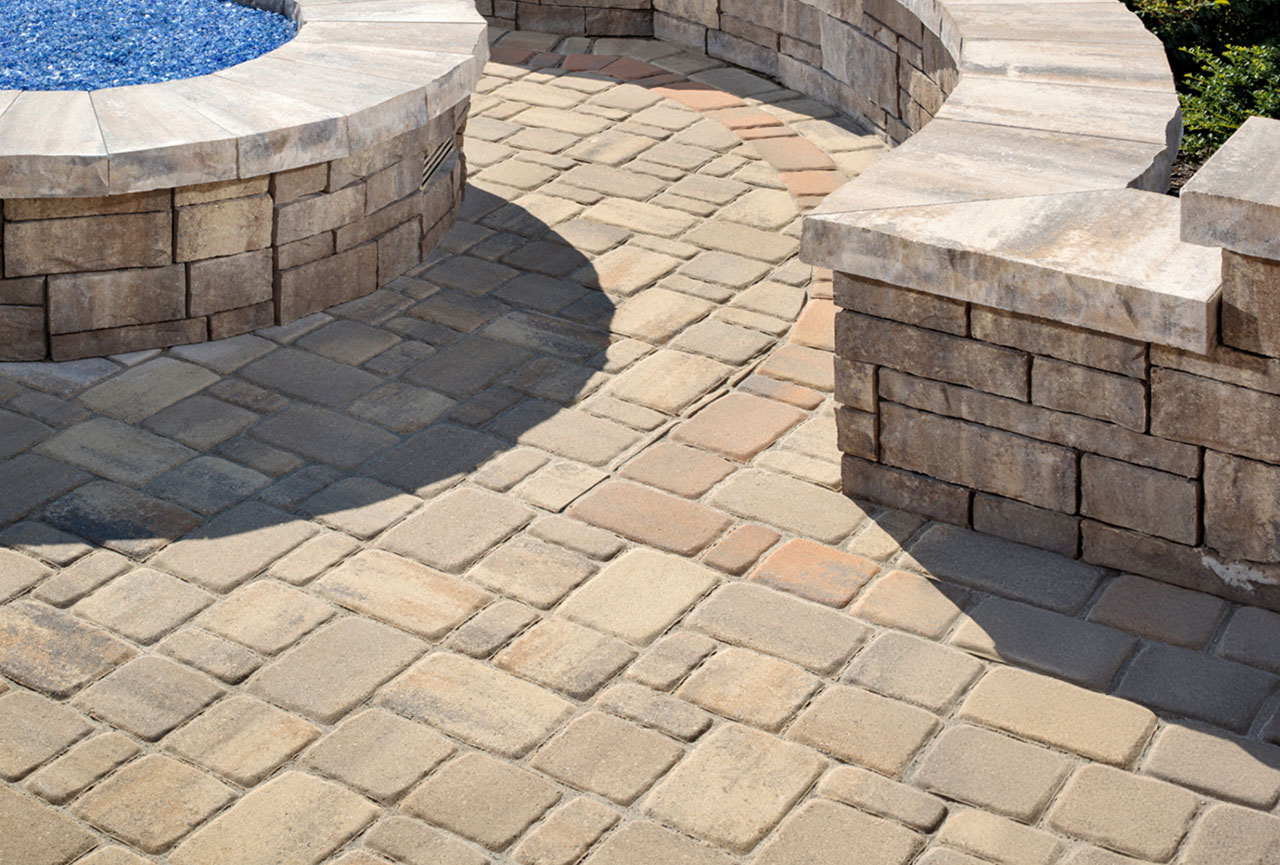
- Segmental block walls use interlocking concrete units (brands like Belgard, Versa-Lok, and Allan Block) that flex slightly with ground movement and drain well when a crew builds them with gravel and geogrid. They are the most common choice for residential walls here.
- Stone-faced block walls put a structural concrete core behind a natural or manufactured stone face, so you get the strength for taller walls plus the look of real stone.
- Natural stone walls (Oklahoma limestone, fieldstone) bring the most character and age beautifully, though they take more skilled labor to set correctly.
- Poured concrete walls handle tall or heavily loaded sites that need maximum strength.
The right pick depends on the height, the slope, and how the wall ties into the rest of your yard. Timber and railroad-tie walls cost less up front, but they break down fast in our wet-and-dry climate, so most homeowners skip them for a wall they want to keep.
How Do You Build a Retaining Wall That Lasts in Tulsa?
You build a retaining wall that lasts in Tulsa by managing water first and building on a solid base. The structure matters, but drainage is what keeps a wall standing in clay soil. A wall that holds up in Oklahoma includes these features:
- Drainage behind the wall: clean gravel backfill, a perforated drain pipe at the base, and weep holes so water escapes instead of building up.
- A deep, compacted base of crushed stone, leveled correctly so the wall does not settle unevenly.
- Geogrid reinforcement for taller walls (generally over about 4 feet), which ties the wall back into the soil so it can handle the load.
- A slight backward lean, called batter, so the wall leans into the slope instead of away from it.
- Durable materials like engineered concrete block, natural stone, or stone-faced block that hold up in our climate.
Taller walls also need engineering and permits, and getting that right protects your investment. Our Tulsa masonry contractors build retaining walls with the drainage, base, and reinforcement that Oklahoma clay demands, and we handle the permitting as part of the project. For what a project like this runs, see our guide to retaining wall cost in Tulsa.
Build a Retaining Wall That Holds Up in Tulsa
Whether you are planning a new retaining wall or worried about one that is leaning, Arrow Outdoor Living can help you build it right for Oklahoma soil. We serve Tulsa, Broken Arrow, Bixby, Jenks, Owasso, and the surrounding metro, and our in-house masonry crews bring decades of craftsmanship to every wall.
Ready to fix a slope, stop erosion, or replace a failing wall? Request your free quote today or call us at 918-300-0379, and we will design a wall built to last.