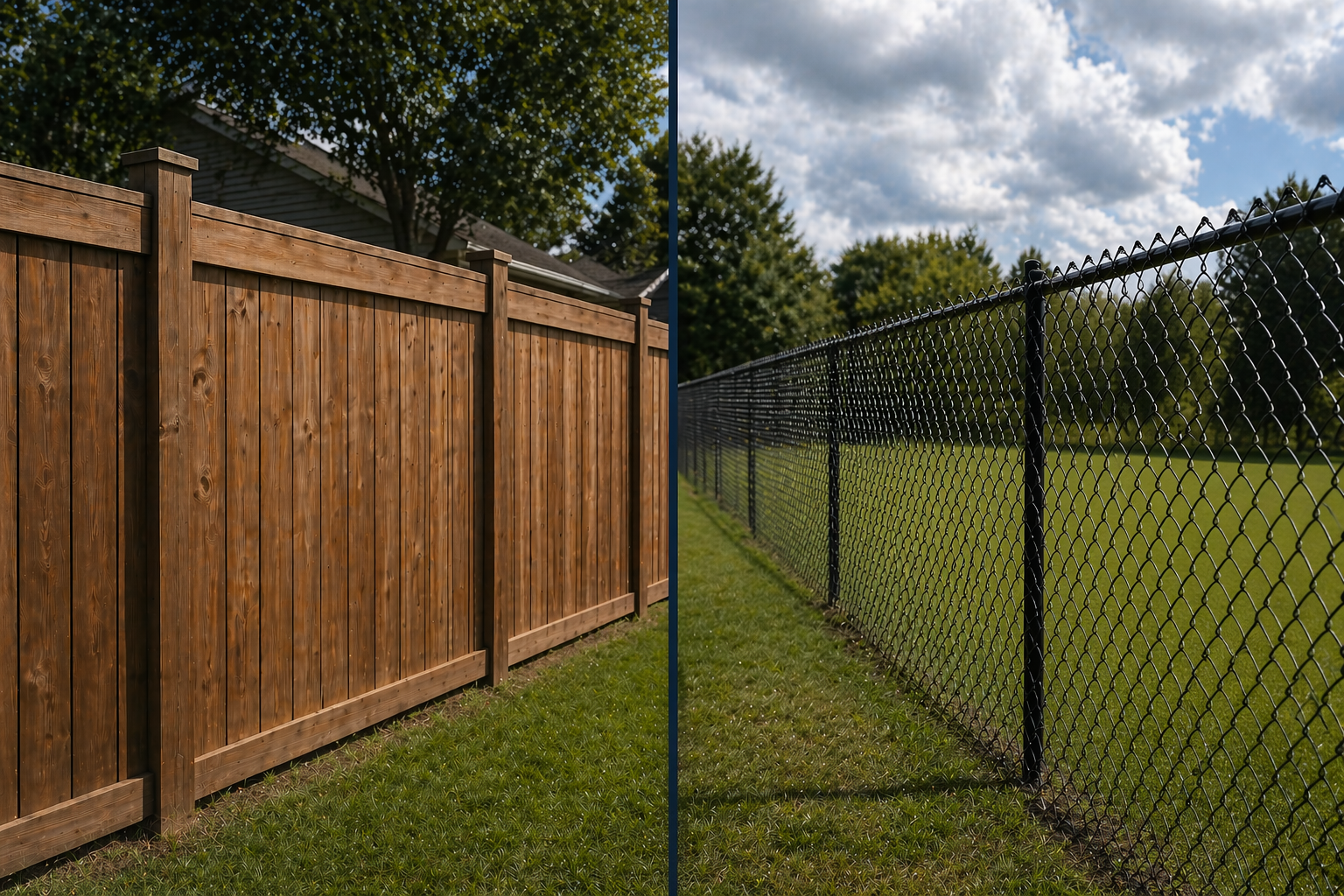
The best fence material for Tulsa depends on what you need it to do. Wood is the right call for privacy, curb appeal, and a classic backyard look. Chain link wins on budget, durability, containment, and large properties. Both handle Oklahoma weather well when installed properly, and both pair beautifully with the PostMaster steel post upgrade for decades of life.
Wood vs. chain link fence, which is better in Tulsa? Picking the right fence material comes down to two main options for most homeowners: wood and chain link. Each handles Oklahoma weather differently, lasts a different number of years, and costs a different amount per linear foot. Wood gives you the classic look and full privacy, but needs regular upkeep. Chain link is the cheapest and most durable, but offers the least privacy. Here is how they compare for Tulsa homes.
Arrow Outdoor Living has built, replaced, and repaired fences across the Tulsa metro since 2021, earning 41 five-star Google reviews along the way. We install both wood and chain link fencing, so this guide reflects what we see quoted and installed every week. No sales pitch, just straight comparison.
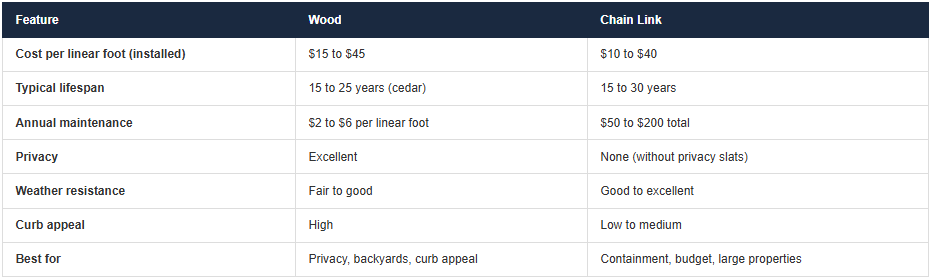
Quick Comparison Table: Wood vs. Chain Link
Wood Fencing in Tulsa
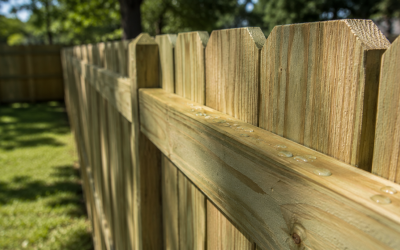
Wood is the classic backyard fence material and the most popular choice across the Tulsa metro. It delivers full privacy, pairs well with any home style, and looks great for decades when properly maintained. Arrow Outdoor Living builds wood fences in three species: treated pine, Douglas fir, and Western Red Cedar.
Wood Fence Cost ($15 to $45 per Linear Foot Installed)
- Pressure-treated pine: $15 to $25 per linear foot. Most affordable wood option. Starting at $29 per linear foot for a 6-foot privacy fence at Arrow’s standard pricing
- Douglas fir: $25 to $32 per linear foot. Mid-range. Tighter grain and cleaner appearance than pine
- Cedar: $30 to $40 per linear foot. Most popular premium choice in Tulsa for its natural rot and insect resistance
- Horizontal cedar (modern style): starting at $45 per linear foot. Clean architectural look, popular on newer construction in Jenks, south Tulsa, and Bixby
Wood Fence Lifespan and Maintenance
- Pressure-treated pine: 15 to 20 years with proper staining
- Douglas fir: 20+ years in Oklahoma climate
- Cedar: 20 to 30+ years thanks to natural rot resistance
- With PostMaster steel post upgrade: 30+ years (steel posts eliminate the ground-level rot that kills most wood fences early)
- Maintenance: Stain or seal every 3 to 5 years, replace damaged boards as needed, tighten hardware
- Annual maintenance cost: $2 to $6 per linear foot
The single biggest factor in wood fence longevity is the post. Traditional wood posts rot at ground level in Oklahoma’s humid climate, often failing before the rest of the fence. That is why we offer the PostMaster steel post upgrade on every wood fence we build. The pickets and rails are still real wood, so it looks identical to a standard wood fence, but the structural backbone underneath outlasts standard wooden posts by decades. Our article on whether steel fence posts are worth the extra cost walks through the math.
Wood in Tulsa Weather
- Humid summers accelerate rot, especially at the base of posts
- Freeze-thaw cycles can cause boards to warp and cup over time
- UV exposure fades untreated wood to gray within 1 to 2 years
- High winds occasionally blow off boards, though replacement boards are cheap and easy
When Wood Is the Right Choice
- You want the classic backyard look and full privacy
- You are willing to stain or seal every 3 to 5 years
- You want a fence you can customize, paint, or modify later
- Curb appeal matters for resale or neighborhood fit
Chain Link Fencing in Tulsa
Chain link does not get the credit it deserves. For the right use case, it is an excellent fence that handles Oklahoma weather better than many premium materials. Arrow Outdoor Living installs standard 5-foot chain link for backyards, dog runs, and commercial properties, plus round rail with black chain link infill for acreage, rural properties, and agricultural needs.
Chain Link Fence Cost ($10 to $40 per Linear Foot Installed)
- Galvanized chain link (silver): $10 to $20 per linear foot. Most affordable option
- Vinyl-coated chain link (black, green, brown): $15 to $30 per linear foot. Cleaner look, better rust resistance
- Heavy gauge commercial chain link: $25 to $40 per linear foot. Industrial-strength for high-traffic or security needs
- Round rail with chain link infill: starting at $28 per linear foot for 4-foot height at Arrow’s standard pricing
Chain Link Lifespan and Maintenance
- Galvanized: 15 to 20 years
- Vinyl-coated: 20 to 30 years, sometimes longer
- Maintenance: nearly zero. Occasional rust spot treatment and hardware inspection
- Annual maintenance cost: $50 to $200 total for a typical yard
Chain Link in Tulsa Weather
- Handles wind exceptionally well because the mesh structure lets wind pass through instead of catching it
- No rot or warping concerns in humid Oklahoma summers
- Coated versions resist rust in Tulsa’s wet springs
- UV-stable, so vinyl-coated options hold color for decades
When Chain Link Is the Right Choice
- Budget is the main priority
- You need to contain pets or kids but privacy is not essential
- You are fencing a large property (150+ linear feet) where premium materials get expensive
- Side yards, dog runs, or utility areas where appearance matters less
- Rural or acreage properties where round rail with chain link infill fits the aesthetic
What Is the Best Type of Fence for Oklahoma Weather?
The best type of fence for Oklahoma weather depends on what you are trying to protect against. Here is the honest answer by climate stressor:
- Best for high wind: chain link. The mesh structure lets wind pass through instead of catching it like a solid panel. Wood fences can be built to Oklahoma wind code with heavier posts and proper spacing, but they fundamentally catch more wind than chain link
- Best for humidity and rot: vinyl-coated chain link. No wood means no rot, and the coating prevents rust in wet springs. Cedar wood with PostMaster steel posts is a close second because the steel posts eliminate the ground-level rot that kills most wood fences
- Best for UV and sun: vinyl-coated chain link holds color longest. Cedar ages beautifully but fades gray without regular staining
- Worst for Oklahoma weather: pressure-treated pine with standard wood posts. The humidity-plus-heat-plus-freeze combo shortens its lifespan more than most climates
What Fence Material Holds Up Best in Tulsa Wind and Sun?
Chain link holds up best in Tulsa wind because the mesh lets gusts pass through. Vinyl-coated chain link holds up best against sun because the coating is UV-stable and does not fade the way untreated wood does. For homeowners who want both privacy and wind resistance, cedar wood with PostMaster steel posts and proper post spacing is the strongest compromise option we install.
A few real-world notes from Tulsa installations:
- Tulsa wind zone: both materials can be installed to Oklahoma wind code, but wood needs heavier posts and wider post spacing to survive the same straight-line wind events that chain link shrugs off
- Full-sun yards: wood fades within 1 to 2 years without sealant. Chain link galvanized finish can dull over time but vinyl-coated versions hold their color for decades
- Ice storms: chain link handles ice loading better than wood. Wood fences occasionally lose a rail or two when heavy ice builds up, though damage is usually repairable
Which Is Cheaper: Wood or Chain Link Fence?
Chain link is cheaper than wood both upfront and over 20 years of ownership. Here is the math for a typical 150-foot Tulsa backyard:
- Chain link (galvanized): $1,500 to $3,000 upfront + $500 in 20-year maintenance = $2,000 to $3,500 total
- Wood (treated pine): $4,350+ upfront + $6,000 in 20-year maintenance + occasional board replacement = $11,000 to $15,000 total
- Wood (cedar with PostMaster posts): $5,100+ upfront + $4,000 in 20-year maintenance = $9,000 to $12,000 total
That is a meaningful gap. Chain link costs roughly one-fourth to one-third what wood costs over two decades. The privacy and curb appeal of a wood fence have real value, but if budget is the main factor, chain link is the clear winner. Want a quick estimate for your exact yard? Use our free Tulsa fence cost calculator to estimate your project, or see our 2026 privacy fence cost guide for Tulsa for more detail.
For national pricing comparison, Angi maintains a current chain link vs. wood fence comparison with 2026 cost data. The national averages line up closely with Tulsa market pricing.
How Long Does a Wood Fence Last Compared to Chain Link?
A wood fence typically lasts 15 to 25 years in Tulsa, while a chain link fence lasts 15 to 30 years. Both can exceed those ranges with proper installation and maintenance. Here is a direct comparison:
- Pressure-treated pine: 15 to 20 years
- Cedar: 20 to 30+ years
- Wood with PostMaster steel posts: 30+ years
- Galvanized chain link: 15 to 20 years
- Vinyl-coated chain link: 20 to 30 years
Chain link wins on low-effort longevity. Wood wins when you factor in the upgrade options (PostMaster steel posts, regular staining, board replacement) that let a well-built wood fence match or exceed a chain link lifespan while delivering full privacy the entire time.
A Quick Note on Vinyl and Other Materials
You may see vinyl fencing marketed as a maintenance-free alternative to wood. Vinyl can be a solid choice in some markets, but Arrow Outdoor Living specializes in wood and chain link because those materials match what Tulsa homeowners actually ask for and perform reliably in Oklahoma conditions. If you specifically want vinyl, we can point you toward contractors who install it.
If you want something more premium than wood or chain link, Arrow also installs ornamental iron fencing starting at $50 per linear foot. Iron is the gold standard for pool enclosures, decorative front yard fencing, and homes where security and style both matter. It often pairs well with stone entry columns for a high-end estate look.
Wood vs. Chain Link: Which Is Better for Your Tulsa Home?
Here is a quick decision framework to help you commit:
- What is your primary purpose? Privacy and curb appeal → wood. Containment or boundary marking → chain link
- How long are you staying in the home? Under 10 years → either material works. 15+ years → invest in cedar with PostMaster steel posts or vinyl-coated chain link for longevity
- How much do you hate maintenance? A lot → chain link. It is fine → wood
- What is your budget per linear foot? Under $20 → chain link or pressure-treated pine. $25 to $35 → Douglas fir or cedar. $35+ → cedar with upgrades or ornamental iron
- Does your HOA have restrictions? Check first. Many Tulsa HOAs require specific materials, heights, or colors, especially in newer subdivisions in Jenks, Bixby, and Owasso
Whichever material you choose, run your numbers before you commit. Our fence cost calculator for Tulsa and Broken Arrow estimates your project cost in seconds based on your yard’s linear footage, height, and material choice. Once you have an estimate, confirm whether your project needs a permit. Our Tulsa fence permit guide covers the rules for Tulsa and surrounding cities.
Frequently Asked Questions
Is chain link fence really that much cheaper than wood?
Yes. Galvanized chain link costs $10 to $20 per linear foot installed, while wood ranges from $15 to $45. Over 20 years of maintenance, wood costs 3 to 5 times more than chain link for an average Tulsa backyard. The privacy and curb appeal of wood are worth the cost for many homeowners, but chain link is the clear budget winner.
Can I combine wood and chain link on the same property?
Yes, and we do it often. A common setup for Tulsa homes is wood privacy fence on the street-facing side and backyard for privacy and curb appeal, plus chain link on side yards, dog runs, or back boundaries where privacy is not essential. Mixing materials can cut 20 to 30% off the total project cost without sacrificing the look where it matters.
Does a wood fence or chain link fence add more value to my home?
Wood fences typically add more resale value to Tulsa homes because they boost curb appeal and signal a premium property. Chain link can be a neutral or slight negative for resale in residential neighborhoods unless the property is rural or large-acreage. For side yards and back boundaries, either material performs similarly at resale.
Will my Tulsa HOA allow chain link fencing?
HOA rules vary significantly across the Tulsa metro. Many newer subdivisions in Jenks, Bixby, Owasso, and south Tulsa restrict chain link in front or street-facing yards. Older neighborhoods and rural properties usually have no such restrictions. Always check your HOA covenants and the municipal code before you commit to a material or sign a contract.
Ready to Pick the Right Fence for Your Home?
Choosing the right fence material comes down to how you will use it, how long you plan to stay, and what you are willing to spend. There is no single best option across every yard and every budget. There is only the best option for your Tulsa home. At Arrow Outdoor Living, we install wood and chain link fences across Tulsa, Broken Arrow, Bixby, Jenks, Owasso, and Bartlesville. We also install ornamental iron when homeowners want a premium step up.
Our team can walk your property, discuss your priorities, and give you a free written estimate with transparent pricing. Want a quick estimate before you call? Try our free fence cost calculator for instant estimates on wood and chain link fencing in the Tulsa and Broken Arrow area. Or call us at (918) 300-0379, request a free estimate online, or visit our Tulsa fence builder page for the full range of fence services we offer.