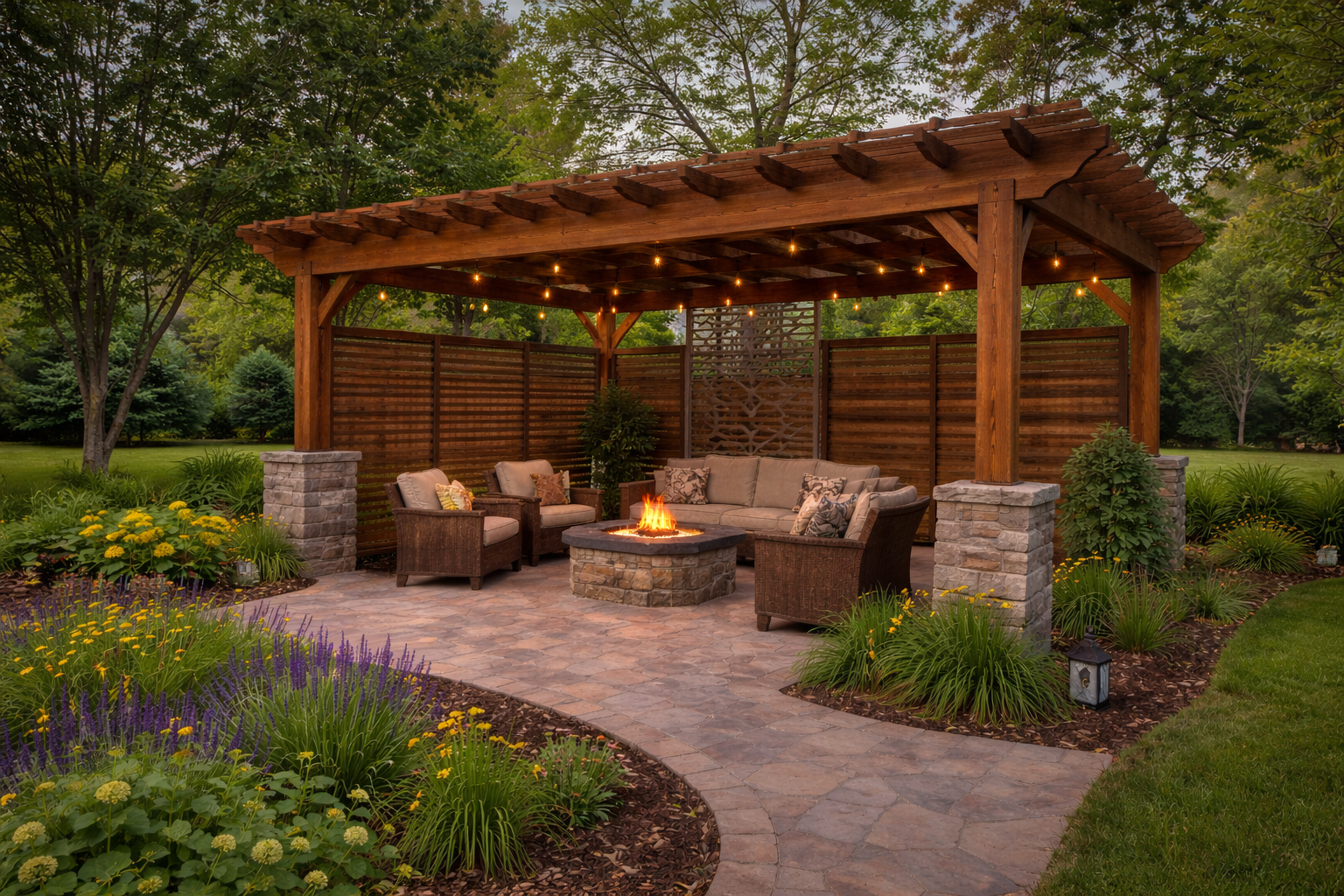
How do you add privacy to your backyard in Tulsa without installing a fence? The most effective options are pergolas with privacy panels or curtains, masonry walls, dense privacy plantings, decorative screens, and water features — and many of them cost less than a full fence while doing more for your backyard’s overall look and function.
Fences aren’t always the answer. You might rent and can’t install a permanent structure. Perhaps you’ve already hit the HOA’s fence height limit. Or you simply don’t want a solid wall boxing in your yard. Whatever the reason, Tulsa homeowners have more privacy options than most people realize — and several of them add real value to your outdoor space at the same time.
Here’s a breakdown of what actually works in our climate.
1. Build a Pergola or Covered Structure
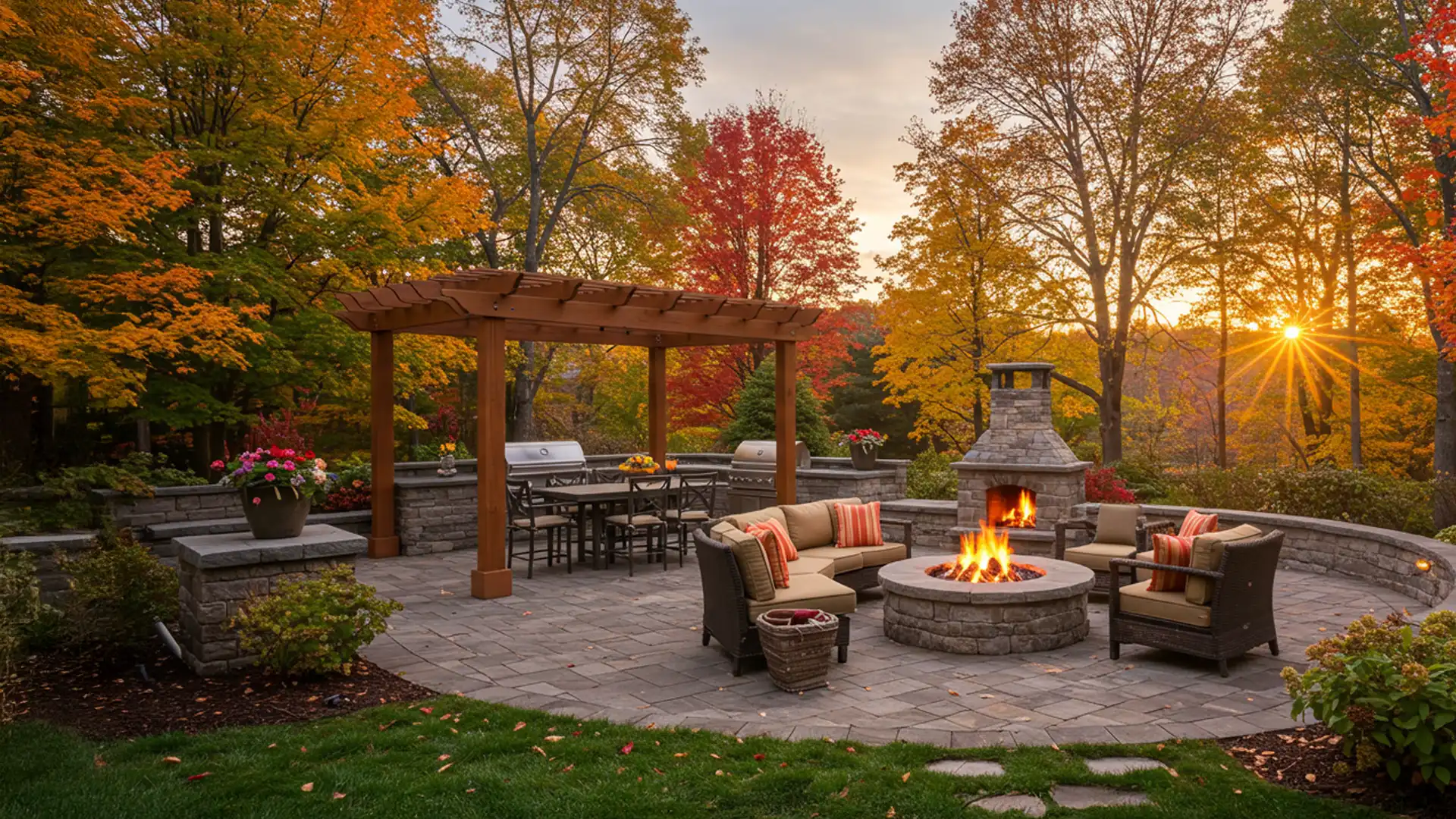
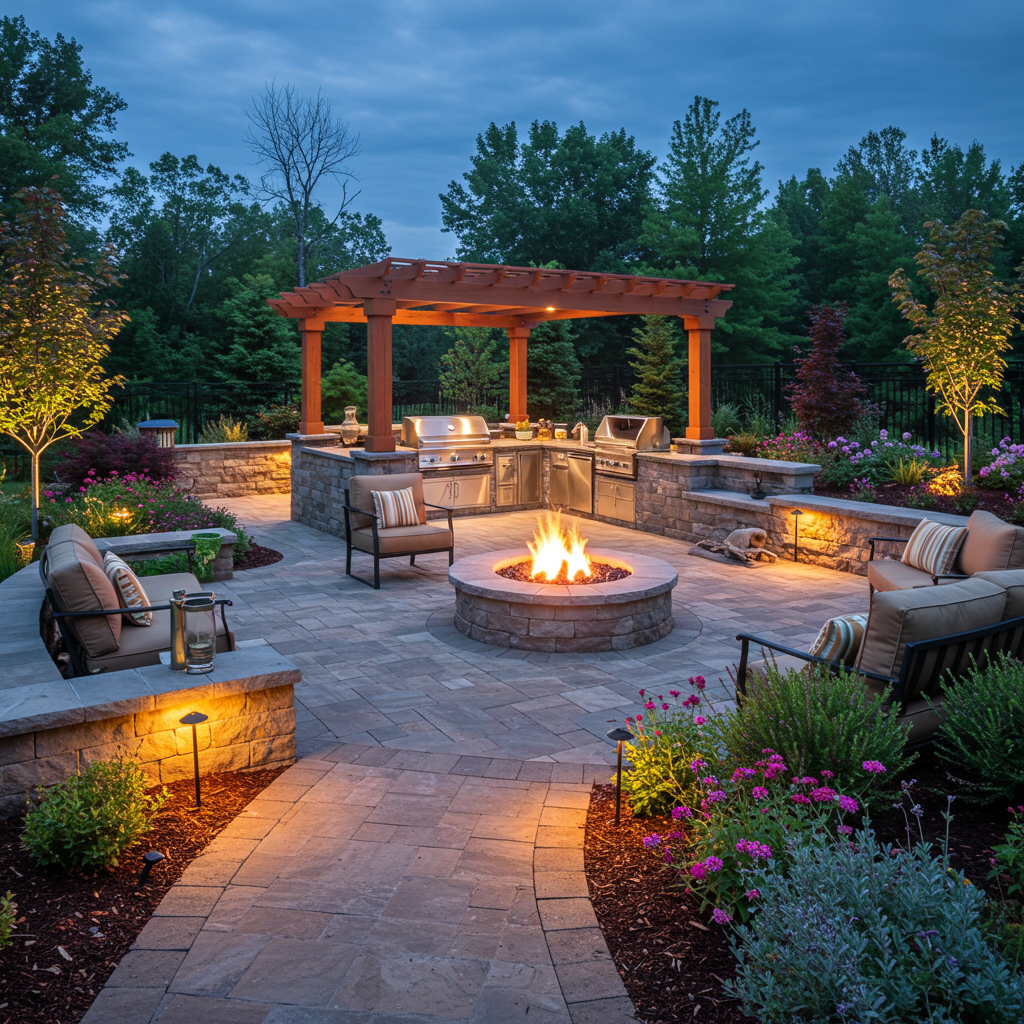
A pergola is one of the most versatile privacy upgrades you can make to a Tulsa backyard. The posts and overhead beams naturally break sightlines from neighboring yards and second-story windows. Add lattice panels on one or two sides and you have a defined, semi-private outdoor room without a single fence board.
Hanging outdoor curtains or shade sails from the structure gives you adjustable privacy on demand. Pergolas also set the stage for climbing vines — Confederate Jasmine, Trumpet Vine, and Crossvine all thrive in Oklahoma and fill in quickly. If you’re curious about what a structure like this costs before committing, our guide to pergola pricing in 2026 walks through the numbers by material and size.
For a fully enclosed feel, a pavilion or covered patio structure takes things a step further, giving you solid roof coverage and the option to add privacy walls on any side.
2. Use a Masonry Wall or Stone Screen
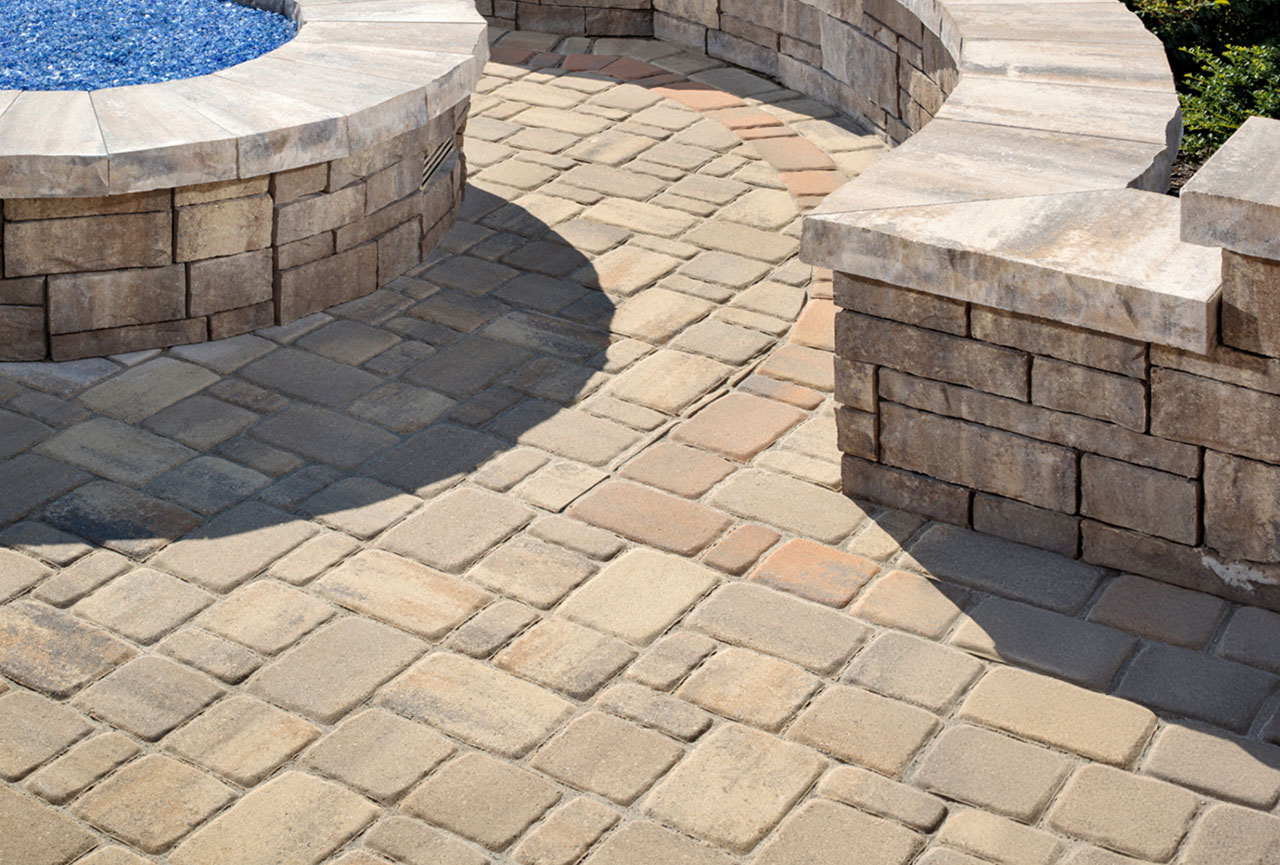
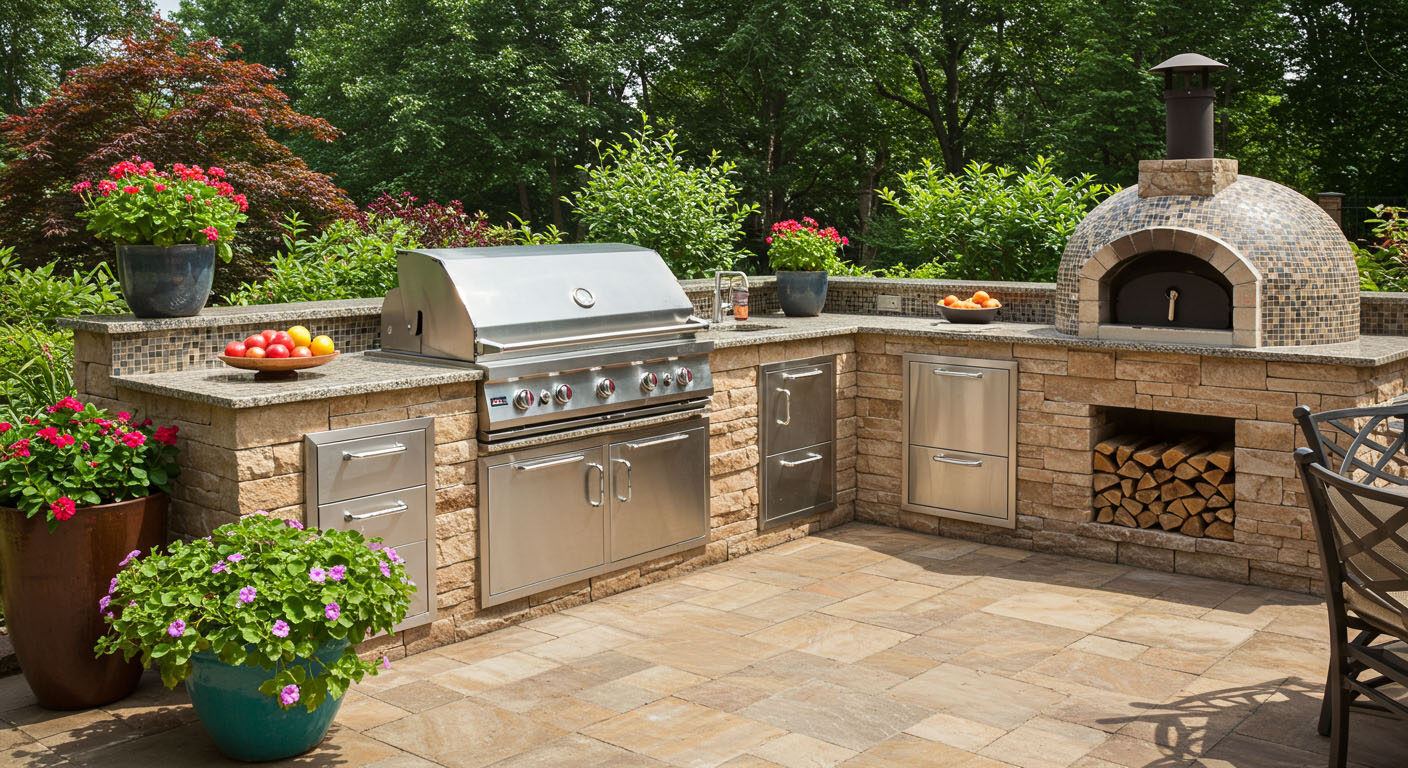
A low masonry wall — anywhere from 2 to 4 feet tall — paired with tall plants or lattice on top can be more effective than a fence. It creates a sense of enclosure without making your yard feel boxed in. Stone and concrete block walls also hold up exceptionally well against Oklahoma wind, unlike wood privacy fences that can warp, lean, or blow over in severe weather.
Around a patio or seating area, this approach works especially well. The wall defines the space, adds permanence, and gives you something with real architectural weight. To understand how masonry integrates with other features in an outdoor build, check out our breakdown of stamped concrete vs. pavers for Tulsa backyards — the same design decisions apply when choosing surfaces alongside a privacy wall.
3. Plant a Living Privacy Screen
A well-planned row of evergreens or dense shrubs can match the privacy of a 6-foot fence within two to three growing seasons — and in Tulsa’s climate, many fast-growing options fill in faster than homeowners expect. Here are the best performers for our zone:
- Emerald Green Arborvitae — Narrow, upright growth to 10–15 feet. Excellent for tight spaces along property lines. Evergreen, so it works year-round.
- Nellie Stevens Holly — Dense, fast-growing, and tolerates Oklahoma heat and clay soil. Grows 15–25 feet tall and maintains privacy in all seasons.
- Texas Sage (Leucophyllum frutescens) — Grows 5–8 feet and blooms purple after rain. Extremely drought tolerant once established, which matters in a Tulsa summer.
- Skip Laurel — Fast growing, adaptable, and dense enough to block sightlines within a couple of seasons. Works well as a lower hedge or mid-height screen.
- Eastern Red Cedar — Native to Oklahoma, very wind resistant, grows 30–40 feet over time. Best for creating a long-term windbreak and privacy line along a back property boundary.
For the best results in Oklahoma’s clay-heavy soil, plant in fall so root systems establish before summer heat arrives. Space columnar evergreens 3–5 feet apart for faster coverage. A layered planting works best — taller trees at the back, mid-height shrubs in the middle, ornamental grasses in front. That combination creates the most natural-looking screen and holds up better against wind than a single row of one species.
For a deeper look at which plants perform best in our zone, our guide to drought-tolerant plants for Tulsa landscaping covers perennials, shrubs, grasses, and trees that thrive in Oklahoma heat.
4. Install a Decorative Privacy Screen or Trellis
Freestanding privacy panels — made from cedar, composite, or powder-coated steel — are one of the most flexible options. They go exactly where you need them without any permitting or major installation. A 6-foot cedar screen panel, properly anchored, works well to block a specific sightline from a neighbor’s window or a busy street without enclosing your entire yard.
Trellises serve a similar function and become more effective over time as climbing vines fill in. Clematis, Crossvine, and Virginia Creeper are all good Oklahoma-hardy options. The key is placement: put screens and trellises where the specific privacy problem is, not along the full perimeter of your yard, which can make even a large space feel closed in.
5. Add a Water Feature
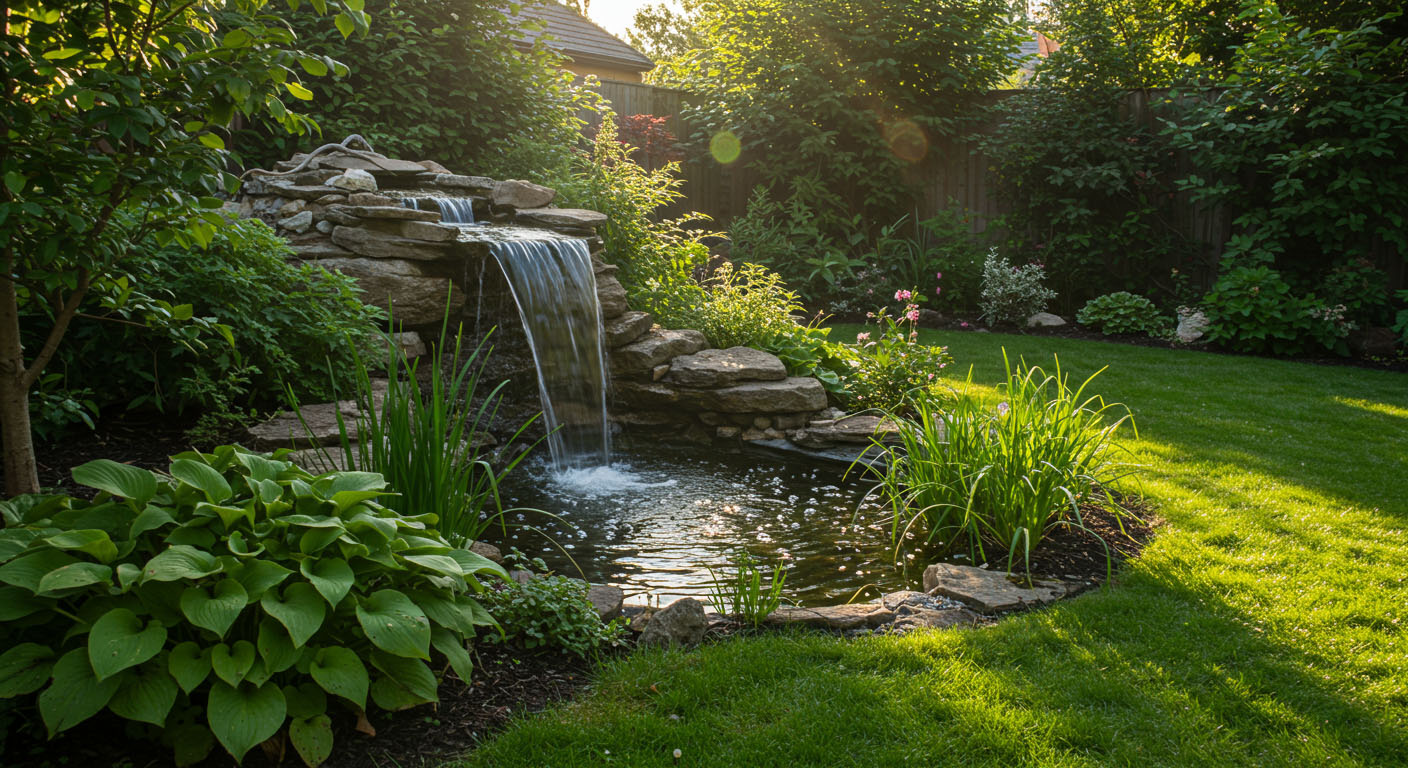
Privacy isn’t only visual — it’s also acoustic. A water feature won’t block your neighbor’s view, but it masks conversation and reduces traffic noise. The result is a more private, self-contained feel. A recirculating fountain or small pondless waterfall can make a 500-square-foot patio feel like a retreat even without a single fence panel.
In Tulsa, water features pair naturally with shade structures and landscaping to create a layered outdoor space. The sound of running water is one of those details that homeowners consistently say they underestimated until they had it.
Tulsa-Specific Considerations
A few things that matter specifically for Tulsa homeowners when planning any of these options:
- Wind load — Tulsa averages 13 mph sustained winds and regularly sees gusts above 50 mph during storm season. Any freestanding screen or panel needs to be properly anchored, and tall privacy plantings should include wind-resistant species. This is one reason masonry walls outperform wood panels for long-term durability here.
- HOA rules — Many Tulsa-area HOAs cap fence height at 6 feet or restrict fence locations. Pergolas, masonry walls, and planted screens often fall under different rules entirely — check with your HOA before assuming any option is off the table.
- Soil — Tulsa’s clay soil retains moisture but compacts easily. Plants need amended soil at planting time, and masonry structures benefit from properly compacted base material to prevent shifting over time.
- Sun and heat — South and west exposures are brutal in a Tulsa summer. If you’re adding a pergola or covered structure primarily for privacy, orienting it to also block afternoon sun extends the number of hours your outdoor space is actually comfortable.
Which Option Is Right for You?
The right combination depends on your budget, how quickly you need results, and what’s driving the privacy need. Here’s a quick way to think through it:
- Need privacy fast → Freestanding panels or privacy screens give you immediate results.
- Want something permanent and low maintenance → Masonry walls or a pergola with panels.
- Prefer a natural look → A layered planting of evergreens and native shrubs.
- Working with a covered patio or pergola you already have → Curtains, lattice panels, or climbing vines are low-cost upgrades that make a big difference.
- Privacy AND property value → A pergola or pavilion combined with landscaping delivers both.
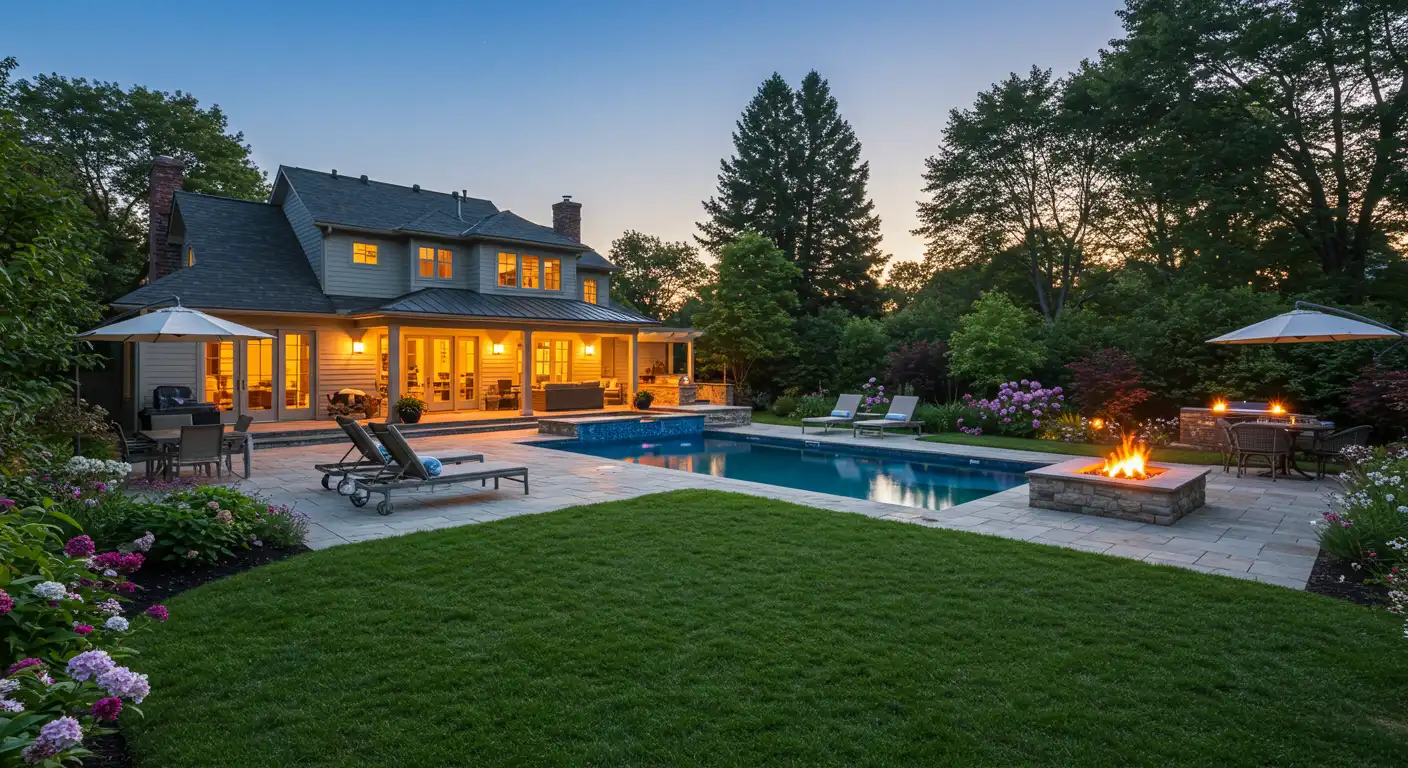
Most of the Tulsa backyards we work on use two or three of these strategies in combination. A masonry seating area, a pergola overhead, and a row of arborvitae along the property line work together to create something that’s genuinely private — and looks intentional, not patched together.
For a look at how these projects come together on a real timeline, our post on how long it takes to build an outdoor living space walks through typical build phases from planning to completion.
Frequently Asked Questions
Do I need a permit to add a pergola or masonry wall in Tulsa?
Structures above a certain size typically require a permit in Tulsa. Whether a freestanding pergola or masonry wall needs one depends on size, height, and whether it’s attached to the house. Arrow Outdoor Living handles permitting as part of every project, so you don’t have to figure that out on your own.
How fast do privacy plantings grow in Tulsa?
Fast-growing species like Nellie Stevens Holly and Skip Laurel can add 2–3 feet of height per year in good conditions. Emerald Green Arborvitae grows 6–12 inches per year but maintains its shape better over time. In Tulsa’s climate, most homeowners see meaningful coverage within two to three growing seasons.
What’s the most affordable option?
Freestanding cedar or composite privacy panels are typically the lowest upfront cost for immediate results. A row of 5-gallon shrubs is also inexpensive but requires patience. If budget is the main constraint, panels now combined with plantings over time is the most common approach.
Can I add privacy to a patio that already has a pergola?
Yes — and this is one of the easiest upgrades you can make. Outdoor curtain panels, bamboo roll shades, lattice side panels, or trained vines all work well. Each adds a different aesthetic and level of privacy. Curtains are the most flexible; lattice with climbing plants is the most durable long-term option in Oklahoma wind.
Ready to Get Started?
Arrow Outdoor Living designs and builds pergolas, masonry walls, water features, and complete outdoor living spaces for Tulsa homeowners. If you’re not sure which approach makes the most sense for your yard, we’ll walk you through the options during a free on-site consultation.