Stain a new fence when the wood is dry enough to absorb it, not when the calendar says so. Sprinkle water on a board. If it beads up, wait. If it soaks in, you are ready. Wet-treated pine in Oklahoma humidity often needs several months, while kiln-dried lumber can be ready in weeks.
When can you stain a new fence? The honest answer is that nobody can tell you a number without looking at your fence, and the advice online proves it. Search this question and you will find recommendations ranging from three weeks to six months.
Both extremes are correct for different fences. What changes the answer is how your lumber was treated, what species it is, and how humid your area runs. So instead of counting weeks, test the wood.
How Do You Know If a Fence Is Dry Enough to Stain?
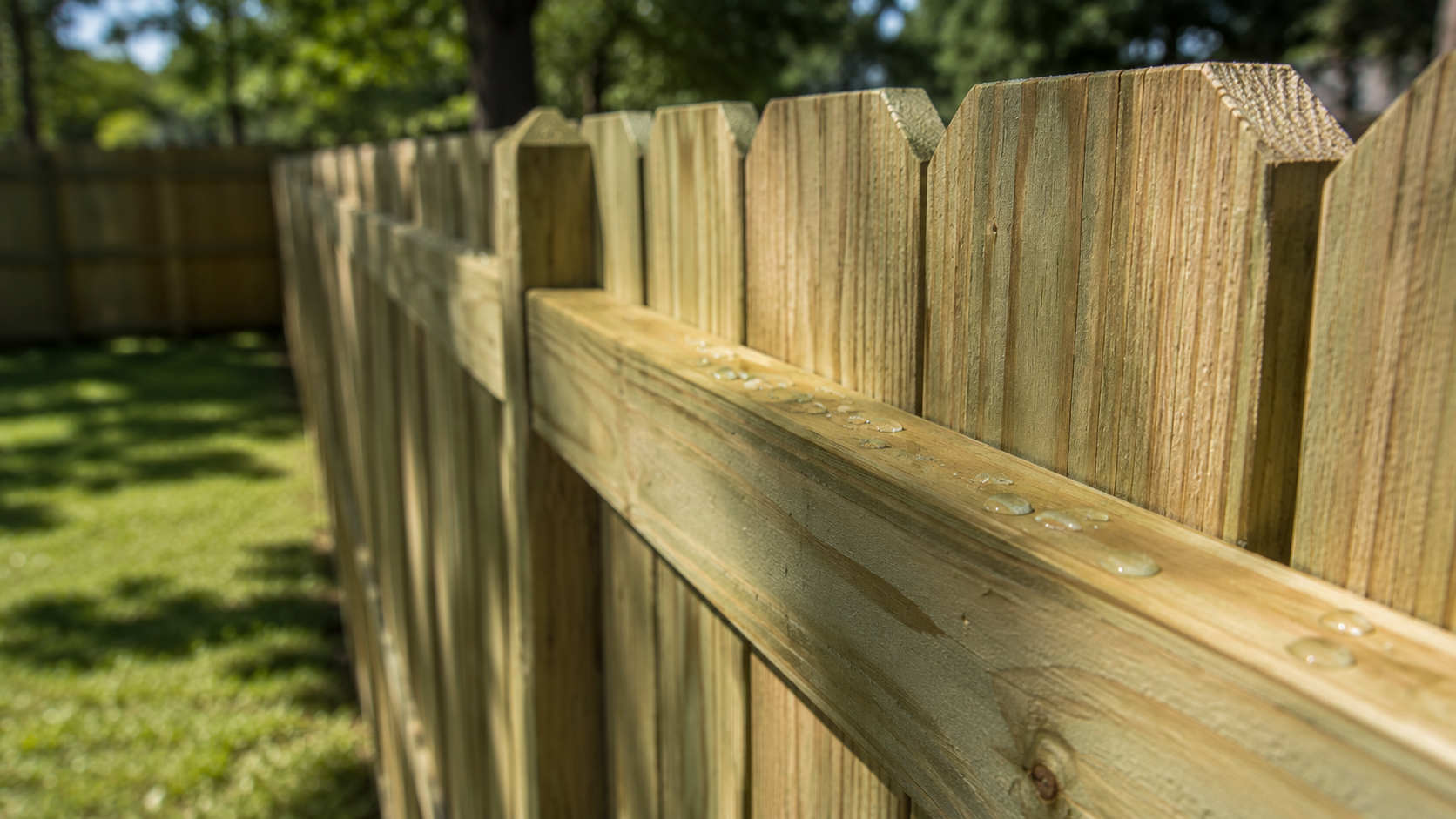
Sprinkle a few drops of water on the boards and watch what happens. YellaWood, a pressure treated lumber manufacturer, describes it as the sprinkle test, and it settles the question in about ten seconds.
Water beads up on the surface. The wood still holds too much moisture. Stain cannot penetrate wood that is already full of water. Wait several days and test again.
Water soaks in. The wood has dried enough to absorb stain properly. You are ready.
Test in several spots rather than one. Posts hold moisture far longer than pickets because they are thicker, and a fence that passes on the pickets can easily fail on the 4x4s. Test the thickest members before you commit.
Do not judge by appearance. Pressure treated wood feels dry to the touch while still holding moisture deep inside, which is exactly why so many people stain too early.
What Happens If You Stain a Fence Too Soon?
The stain sits on the surface instead of soaking in, and the finish fails within months. You end up paying twice, once for the wasted product and again for the labor to strip and redo it.
Staining wet wood causes several problems at once:
- Poor absorption. Stain cannot penetrate wood already saturated with moisture, so it never bonds properly.
- Trapped moisture. A finish over wet wood seals water inside, which invites mold and mildew.
- Uneven color. Boards with different moisture levels absorb differently, leaving a blotchy result.
- Early failure. The finish peels or flakes far sooner than it should.
The wasted money stings more than the wait. A fence stain job costs real material and real hours, and doing it twice within a year is an expensive way to learn the lesson.
Can You Stain a Cedar Fence Right Away?
Cedar dries faster than pressure treated pine because nobody forced moisture into it. Pressure treated boards arrive wet from the treatment process itself. Cedar skips that step entirely.
That said, cedar still needs to dry and acclimate after installation. It arrives with natural moisture content and it needs time to adjust to your climate. The sprinkle test applies to cedar exactly the same way.
Cedar owners have a real choice that treated pine owners do not. Left unstained, western red cedar weathers to a silver-gray patina that many homeowners prefer, and its heartwood holds up well without a finish. Staining is about appearance and color retention rather than survival.
Douglas fir sits between the two. It takes stain well and benefits from it more than cedar does. Our guide to fence styles for Tulsa backyards covers how each species behaves here.
Why Does the Advice Vary So Much?
Four variables change the answer, and most articles only account for one. Understanding them tells you which advice applies to your fence.
How the lumber was treated. Wet-treated pine comes off the truck saturated. Kiln-dried after treatment lumber, labeled KDAT, gets dried in a kiln afterward and can be ready to stain almost immediately. YellaWood notes that newer micronized copper preservatives changed the old rules, and recommends staining within six weeks when the wood is sufficiently dry.
Wood species. Treated pine, cedar, and Douglas fir all behave differently.
Board thickness. A thin picket dries in a fraction of the time a 4×4 post takes. Moisture sits deep in thick members long after the surface feels dry.
Your climate. Humid regions add months. Dry regions cut the wait dramatically. Oklahoma runs humid enough through spring and early summer to slow drying considerably.
For wet-treated pine in Oklahoma conditions, three to six months is a sensible default expectation. That range is a starting point for planning rather than a rule, and the sprinkle test is what actually tells you the answer for your fence.
What About the Green Tint?
The green cast on new treated lumber comes from the preservative treatment, not from mold or mildew. It fades on its own as the wood weathers and ages.
The tint has nothing to do with whether the wood is dry. Some homeowners wait for the green to disappear before staining, which is a different clock entirely. Run the water test and let that decide.
Getting a Better Result When You Do Stain
Preparation matters as much as timing. Once the wood passes the water test, a few steps protect the work.
- Clean first. Dirt and debris trapped under stain stay there. A deck cleaner or soap and water works. Avoid heavy pressure that damages the wood surface.
- Let it dry after cleaning. Give the fence about 24 hours before applying anything.
- Watch the weather. Stain needs dry conditions to cure. Check that rain is not coming.
- Avoid direct sun. Stain drying too fast on a hot board leaves lap marks and uneven color.
- Keep sprinklers off the fence. Water hitting unstained wood can leave marks that need extra work to remove.
- Work top to bottom. On vertical surfaces, starting at the top keeps runs and drips from marking finished sections.
Stain choice affects how long the finish lasts. Semi-transparent stains let grain show and need more frequent reapplication. Solid stains give heavier coverage and last longer. Our breakdown of privacy fence cost in Tulsa includes current staining prices for both.
Want Us to Handle It?
Staining a fence is manageable work if you have the time and the weather cooperates. Plenty of homeowners would rather not spend a weekend on it.
Arrow Outdoor Living builds, stains, and seals fences across the Tulsa metro with in-house crews. We serve Tulsa, Broken Arrow, Bixby, Jenks, Owasso, and the surrounding communities, and we can tell you whether your fence is ready before anyone opens a can.
You can see our fence work and published pricing on the Tulsa fence builder page.
Request a free on site estimate from Arrow Outdoor Living and we will take a look.