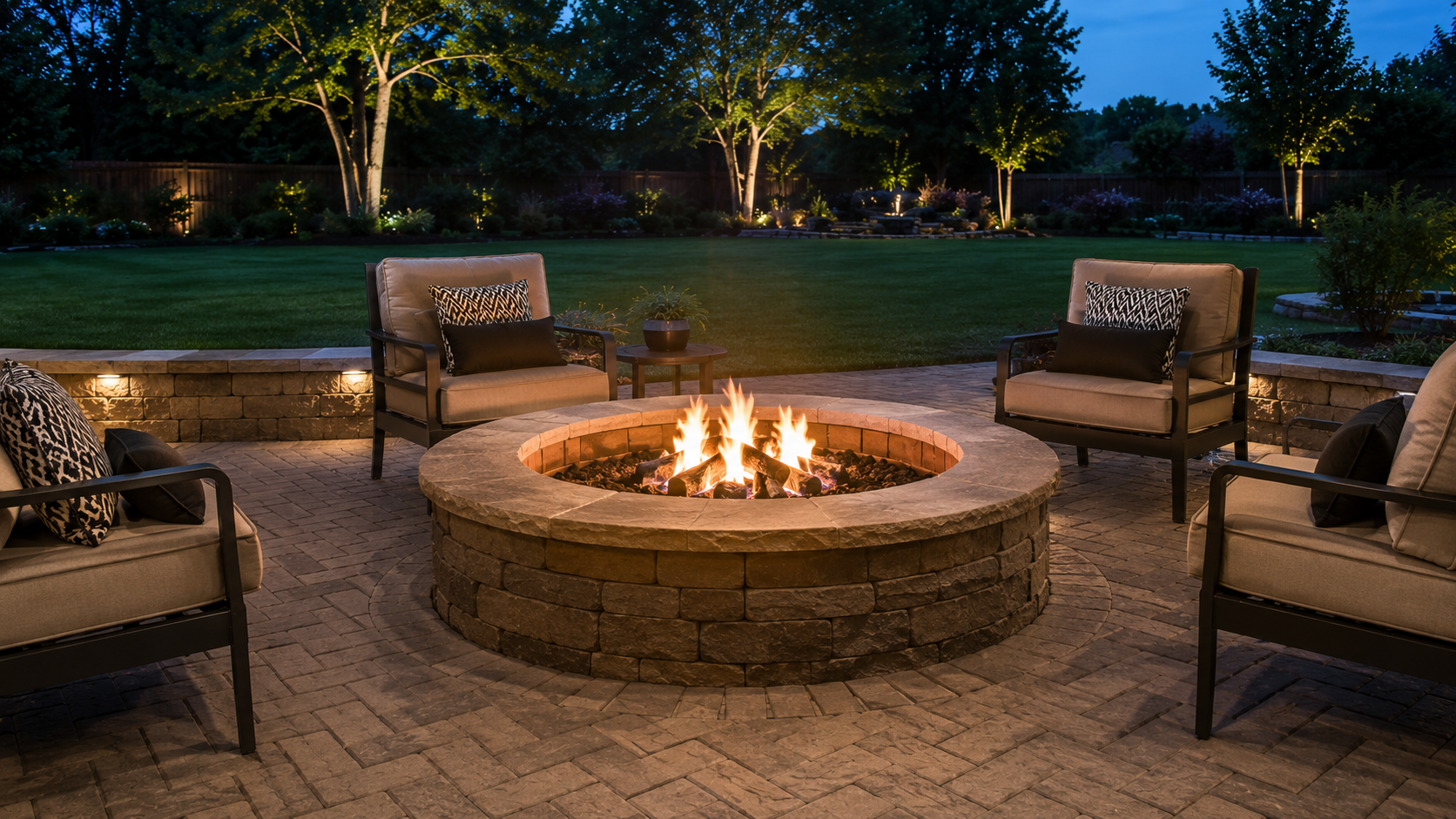
Yes, you can put a fire pit on a paver patio, and you need a heat barrier under it. Concrete pavers meet a standard that tests freeze-thaw durability and caps water absorption, with no heat requirement at all. The moisture they do hold turns to pressure under direct heat, which causes discoloration, cracking, and surface spalling.
Putting a fire pit on a paver patio works well when you plan for the heat. The pavers will not catch fire, and they will discolor and crack if flame sits directly against them week after week.
The better question is whether you are placing a fire pit on a patio you already own, or building both at once. Those situations call for completely different answers, and most advice online only covers the first one.
Can You Build a Fire Pit Directly Into a Paver Patio?
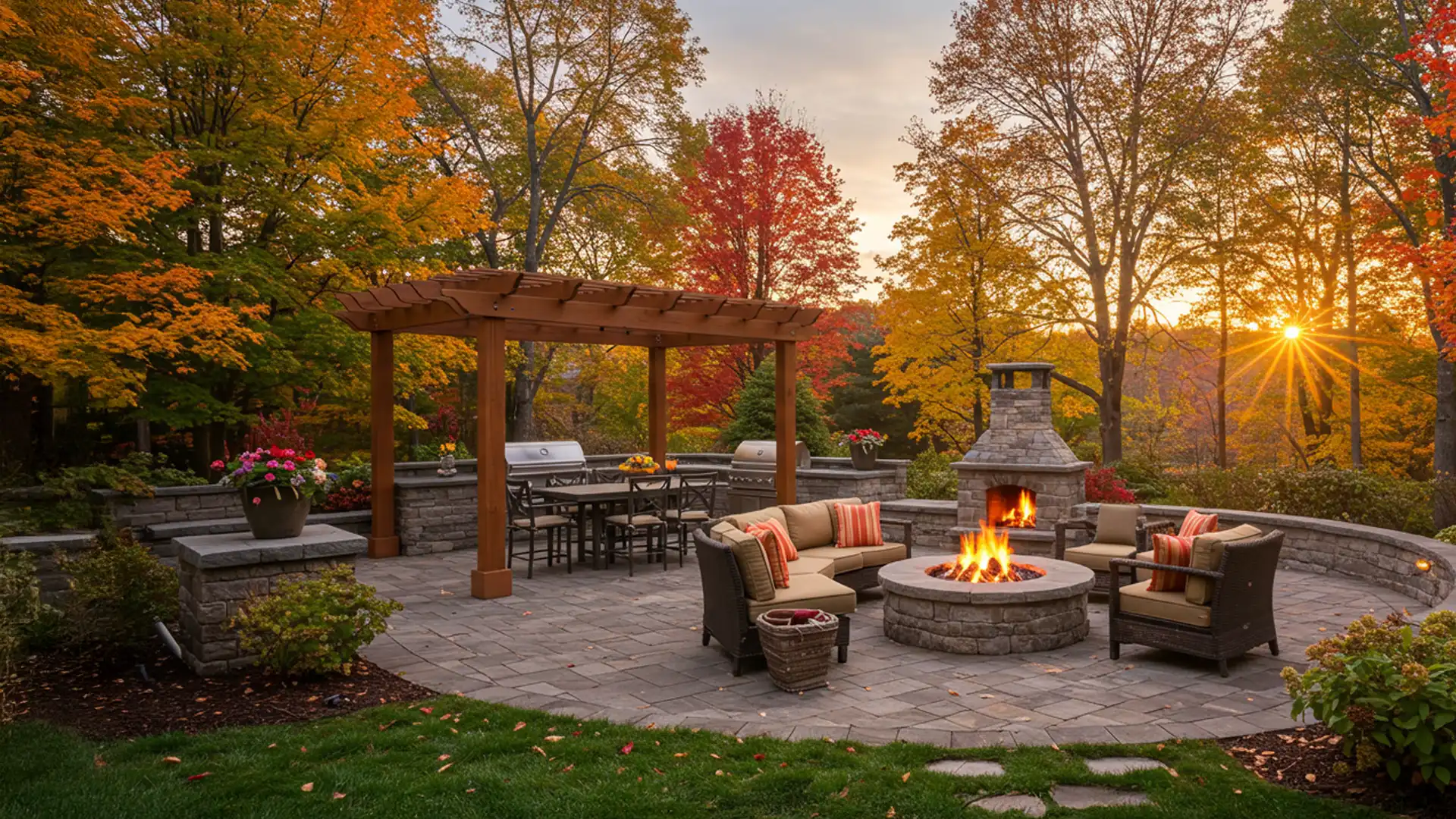
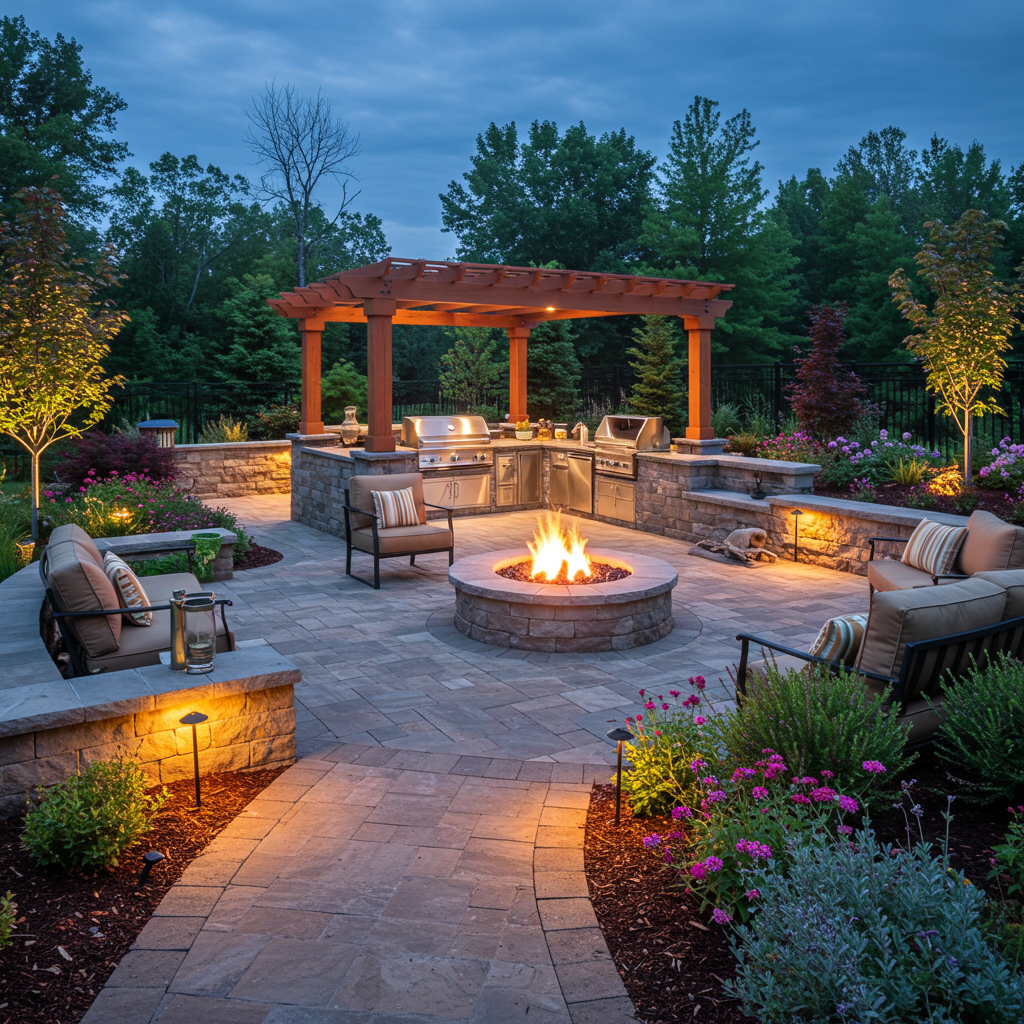
Yes, and building it in produces a better result than setting a portable pit on a finished surface. A built-in fire feature becomes part of the patio design from the start, which solves the heat problem before it exists.
A properly built-in fire pit sits on its own footing rather than on the paver bedding layer. That matters for two reasons. A masonry fire feature carries real weight, and the paver base was engineered for foot traffic. Setting several hundred pounds of stone on bedding sand creates a settling problem within a season.
Fire brick lines the interior, which handles sustained high temperatures that concrete products cannot. The visible exterior can then be whatever matches your patio, since the fire brick absorbs the thermal load and the outer stone never sees direct flame.
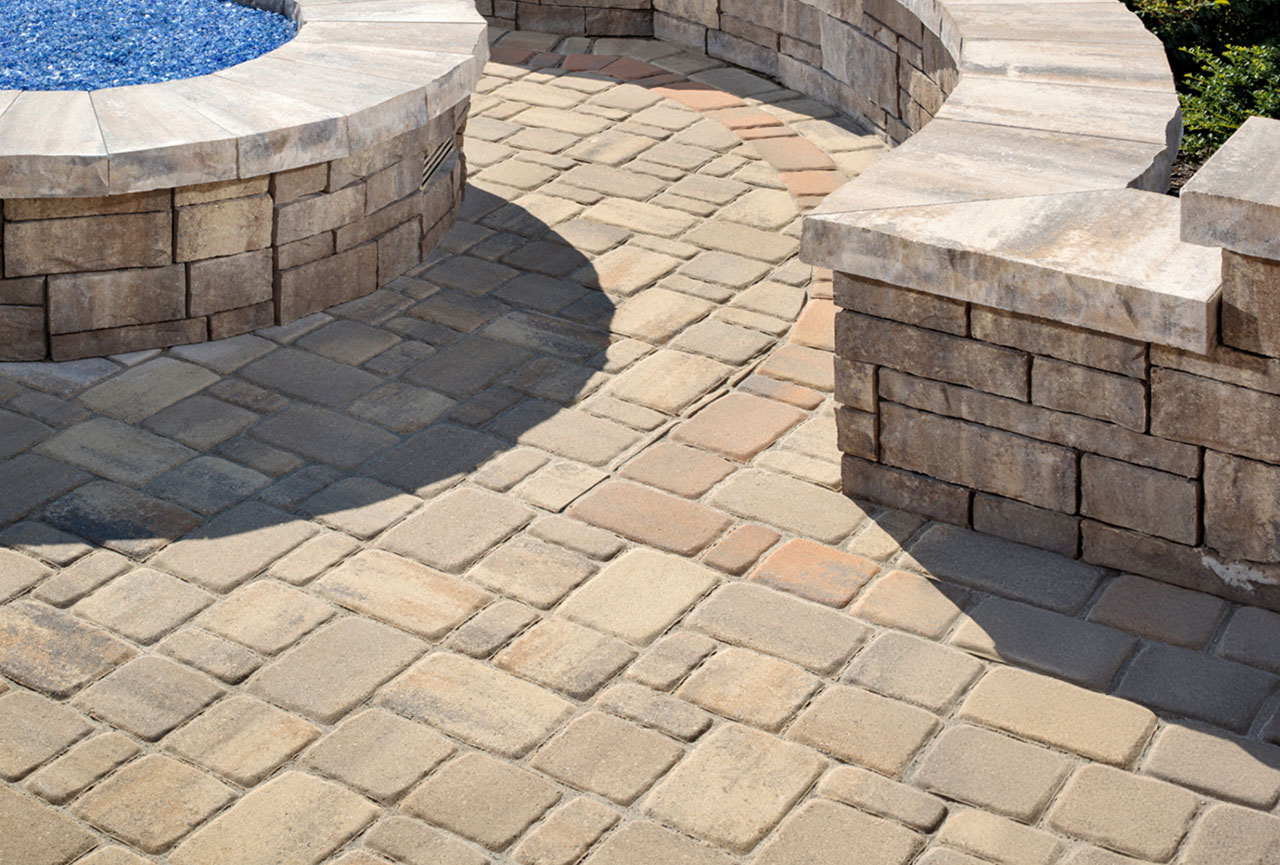
Building both together also lets the crew plan the surrounding surface. Pavers immediately around a fire feature can be a different material, a different thickness, or laid over a different base detail. None of that stays available once the patio is finished.
Are Pavers Heat Resistant?
Concrete pavers are durable rather than heat resistant, and the manufacturing standard shows why. Pavers made in the United States meet ASTM C936, which requires a minimum average compressive strength of 8,000 psi and average absorption no greater than 5 percent.
Look at what that standard tests for. Compressive strength covers weight. Absorption covers water. Freeze-thaw testing under ASTM C1645 verifies durability, cycling samples through cold while immersed in water.
Heat resistance appears nowhere in the specification. Manufacturers engineer and certify concrete pavers for Oklahoma winters, not for a fire burning on top of them.
Fire brick tells the opposite story. Kiln fired brick handles sustained high temperatures because manufacturers build it for exactly that. The two products solve different problems, and using one where the other belongs causes the damage people run into.
Will a Fire Pit Crack or Damage Pavers?
Direct flame on concrete pavers causes discoloration first and cracking later, and the absorption limit explains why. Pavers hold moisture inside them.
Heat that moisture quickly and it expands faster than it can escape. The pressure has to go somewhere, so it pushes outward through the surface. That produces spalling, which is the chipping and flaking you see on a paver that has taken repeated heat.
The damage builds in a predictable order:
- Discoloration. Shows up first and shows up permanently. Soot and heat both stain the surface.
- Surface spalling. Small chips and flakes as trapped moisture escapes.
- Cracking. Follows repeated heating and cooling cycles.
- Joint sand loss. Heat dries the sand between pavers, and dry joint sand blows and washes out.
Usually one paver takes the worst of it while the surrounding ones stay sound, which makes replacement straightforward if you kept spares from the original install. Without spares, color matching across production runs is difficult.
Worth noting that base failure and heat failure look different. If a section of your patio is sinking rather than chipping, the cause sits underneath instead of on top, and our guide to why pavers sink covers that separately.
Is a Gas Fire Pit Safer for Pavers Than Wood?
Gas fire pits treat pavers better than wood, because a gas flame burns at a controlled level and distributes heat more evenly. Wood fires spike, throw embers, and drop hot coals.
The practical differences:
- Heat control. A gas burner runs at a set output. A wood fire varies with what you feed it.
- Embers and coals. Wood throws both. Each one that lands on a paver leaves a mark.
- Ash and soot. Wood produces staining that gas does not.
- Downward heat. Many gas units sit elevated on a base, which keeps concentrated heat off the surface entirely.
Wood still wins on the things people want a fire for, and plenty of homeowners choose it knowing the tradeoff. If you want a wood fire on pavers, build in the protection rather than skipping it. Our breakdown of custom fire pit cost in Tulsa compares gas and wood-burning on price and build.
How to Protect a Paver Patio From a Fire Pit
A heat barrier between the fire pit and the pavers solves most of the problem, and elevation solves the rest. Both cost far less than replacing a section of patio.
What works:
- A fire pit pad or heat shield. Purpose-built mats reflect heat away from the surface. Size it larger than the pit footprint.
- Fire brick underneath. A layer of fire brick between the pit and the pavers spreads and absorbs heat that would otherwise concentrate.
- Elevation. A stand or legs create an air gap, and air is a poor conductor. Elevated pits transfer far less heat downward.
- Placement away from edges. Keep the pit toward the middle of the field rather than near edge restraints, since heat-dried joint sand near a perimeter accelerates spreading.
What does not work is setting a wood-burning pit straight onto pavers and hoping. That is the approach that produces the cracked, stained ring.
Oklahoma adds one more consideration for built-in features. Clay soil swells and shrinks with moisture, and a heavy masonry fire pit needs a footing designed for that movement. A fire feature that shifts pulls the surrounding pavers with it.
Planning a Patio With a Fire Feature?
The best version of this project starts before the patio does. Designing the fire feature and the surface together removes the compromises that come from adding one to the other later.
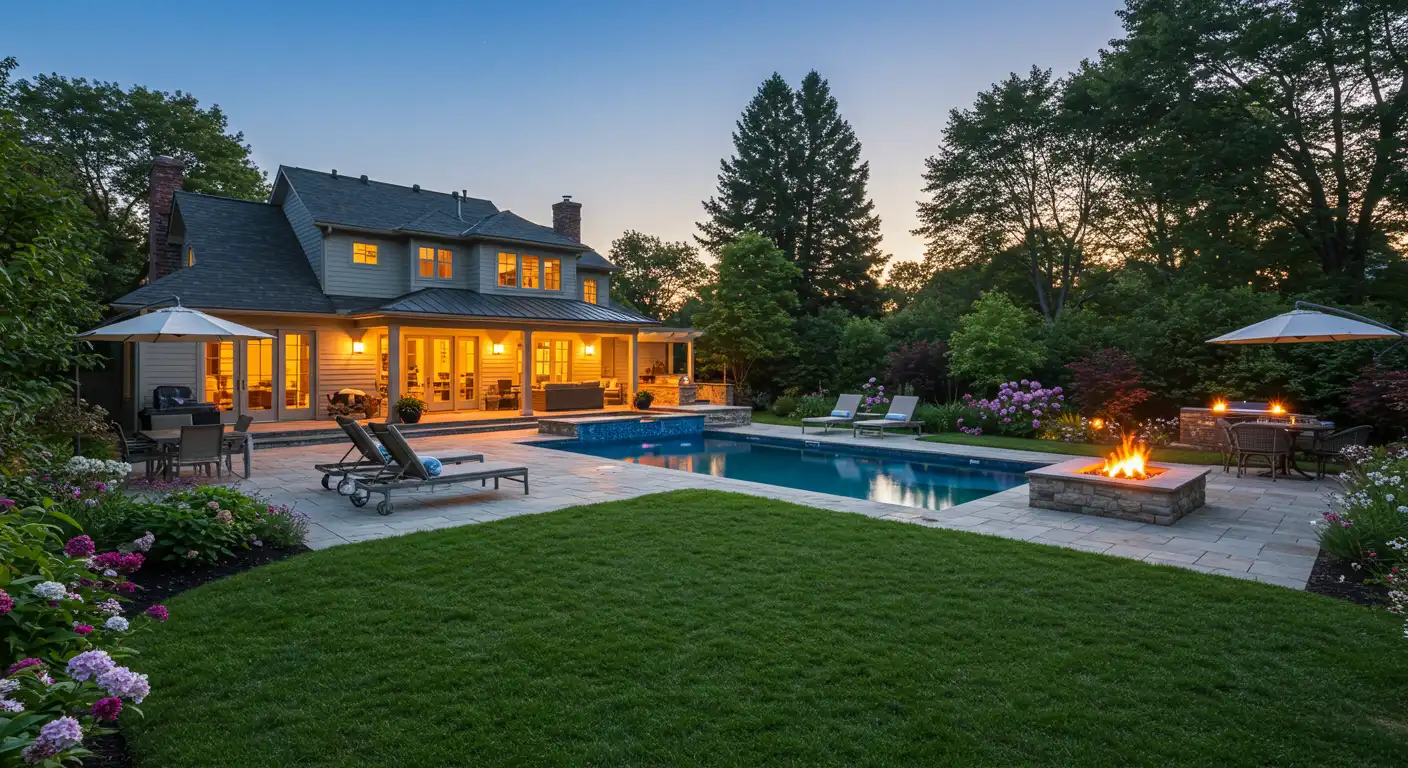
Arrow Outdoor Living builds paver patios and custom fire features with in-house crews across the Tulsa metro, which means one team plans both instead of two contractors working around each other. We serve Tulsa, Broken Arrow, Bixby, Jenks, Owasso, and the surrounding communities.
You can see our work on the Tulsa paver installation page and our outdoor fireplaces and fire features page.
Request a free on site estimate from Arrow Outdoor Living and we will walk the space with you.