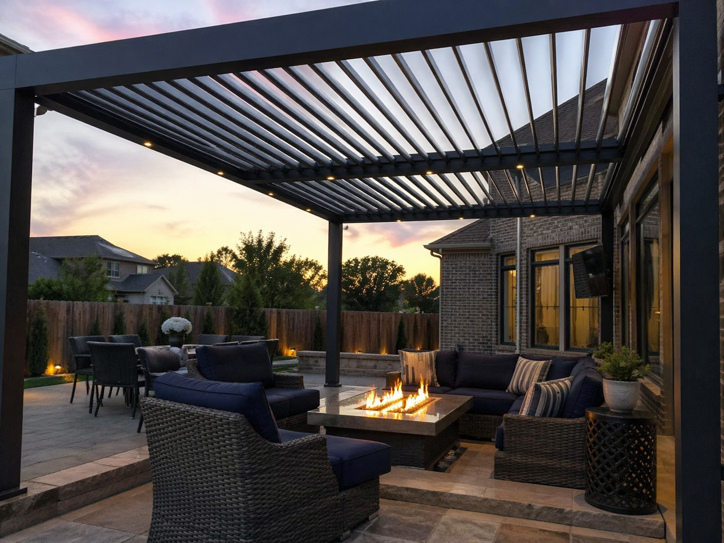
Motorized pergola cost in Tulsa generally runs $60 to $130 per square foot installed, with smart automated models reaching up to $180 per square foot. That means most motorized pergolas land between $15,000 and $50,000+, depending on size and features. Many Tulsa homeowners get similar year-round comfort from a well-built custom wood pergola or pavilion for less money.
Motorized pergola cost is one of the first questions Tulsa homeowners ask when they start looking at high-end backyard upgrades. The short answer is that motorized pergolas typically cost $60 to $130 per square foot installed, which puts most projects in the $15,000 to $50,000 range. That price buys you aluminum louvers that open and close with a remote, giving you shade on demand and rain protection when you need it.
Arrow Outdoor Living has built outdoor structures for Tulsa-area homeowners since 2021, and we get asked about motorized pergolas all the time. This guide breaks down what those systems actually cost, why the price is what it is, and why most Tulsa backyards end up with something different. You will get real ballpark numbers, honest trade-offs, and a clear picture of what fits your yard best.
How Much Does a Motorized Pergola Cost?
A motorized pergola costs $60 to $130 per square foot installed, with smart automated systems reaching up to $180 per square foot. For a standard 12×12 structure, that works out to roughly $8,600 to $18,700 on the base end, and closer to $26,000 for a fully automated smart pergola. Larger sizes and premium brands push totals well past $50,000.
Here is a simplified breakdown based on national pricing data:
- Small 10×10 motorized pergola: around $6,000 to $13,000
- Mid-size 12×16 motorized pergola: roughly $12,000 to $25,000
- Large 16×20 or custom build: $20,000 to $50,000+
- Smart pergola with weather sensors: add $5,000 to $15,000 on top
For detailed national pricing data broken down by material and brand, Angi maintains a current 2026 motorized pergola cost guide that tracks real project quotes from across the country. The ranges line up closely with what we see quoted in the Tulsa market.
Keep in mind these are national averages. Local install costs, permit fees, site prep, and electrical work can all shift the final number. For a straight apples-to-apples comparison, our full pergola cost guide for 2026 walks through what every pergola type costs in the Tulsa area.
What Drives Motorized Pergola Cost Up?
Four factors determine the final price of a motorized pergola: size, material quality, motor and smart features, and installation complexity. Size is the biggest driver, because bigger structures need more aluminum, more louvers, and larger motors. A 20×20 pergola costs roughly four times more than a 10×10, not double.
Material quality matters almost as much. Premium powder-coated aluminum from brands like Struxure or Azenco costs more than entry-level aluminum, but it holds its finish longer and resists corrosion. Cheaper systems often use thinner aluminum and lower-grade motors that wear out sooner.
Smart features add real money fast. Rain sensors, wind sensors, app control, integrated lighting, and ceiling fans each tack on hundreds to thousands of dollars. A basic remote-controlled pergola sits at the low end of the range, while a fully automated smart pergola with every sensor and accessory lands at the top.
Installation is the last piece. Site prep, footings, electrical runs, and permits all add to labor. Attached pergolas usually cost less than freestanding ones because they only need posts on one side.
Is a Motorized Pergola Worth the Cost in Tulsa?
A motorized pergola is worth the cost for homeowners who want push-button control over shade and rain, and who plan to stay in their home long enough to enjoy it. For everyone else, a well-built custom wood pergola or solid-roof pavilion usually delivers more value in Tulsa. Here is why.
Tulsa weather is brutal on aluminum systems. Hail is a real concern in Green Country, and motorized louvers have moving parts that can fail when hit hard. Our summers are hot and humid, our winters bring ice storms, and our springs deliver the kind of straight-line winds that stress every outdoor structure. Wood pergolas built with proper footings and Oklahoma wind loads in mind tend to handle that punishment with less fuss.
There is also a cost argument. A mid-sized cedar or Douglas fir pergola from Arrow Outdoor Living generally runs $12,000 to $25,000, which gets you a premium hand-built structure with decades of life when properly maintained. Step up to a large custom pergola with polycarbonate roof panels, ceiling fans, and lighting, and you are looking at $25,000 to $50,000. That is the same range as a mid-tier motorized aluminum pergola, but you get full rain protection and a structure that matches the warmth of a traditional Oklahoma home.
For a deeper look at which backyard upgrades actually pay off at resale, we walk through the numbers in our outdoor living ROI guide.
When a Motorized Pergola Makes Sense
Motorized pergolas make the most sense in a few specific situations:
- You have a modern or contemporary home where aluminum louvers match the architecture
- You entertain outside often and want to adjust shade and airflow without walking outside
- You have a pool area where watertight rain protection is a must
- Budget is not the primary constraint, and you want the top-of-market feel
If those boxes get checked, a motorized pergola can be a great fit. If they do not, you may get more enjoyment and a longer lifespan from a custom wood structure.
How Long Do Motorized Pergolas Last?
Motorized pergolas typically last 15 to 20 years with proper maintenance, though the motorized components themselves often need service or replacement sooner. The aluminum frame holds up well, but motors, sensors, and electronics are consumable parts. Most quality motors are rated for 10,000+ open-and-close cycles, which works out to 13-plus years at two cycles per day.
Compare that to a Western Red Cedar pergola, which can last 20 to 30+ years when properly stained and maintained. Douglas fir and treated pine also deliver solid longevity when finished with a quality oil-based stain. Wood pergolas require more regular upkeep, but they have no electronics that can fail, no motors that burn out, and no proprietary parts that become hard to source 10 years down the road.
Arrow Outdoor Living builds pergolas in Western Red Cedar, Douglas fir, and treated pine, each finished with Wood Defender stain and seal for long-term protection against Oklahoma sun and moisture. Those structures are engineered for local wind loads and built with proper footings so they hold up through Tulsa’s weather swings.
What Does Arrow Outdoor Living Build Instead?
Arrow Outdoor Living specializes in custom wood pergolas, solid-roof pavilions, covered patios, and gazebos for Tulsa and surrounding areas. We do not install motorized aluminum pergolas, because we believe hand-built wood and solid-roof structures deliver more value for the Tulsa market. Here is what our builds typically cost:
- Basic 10×10 or 12×12 cedar pergolas: $6,000 to $12,000
- Mid-sized cedar or Douglas fir pergolas (12×16 to 16×20): $12,000 to $25,000
- Large custom pergolas with polycarbonate roofs, fans, and lighting: $25,000 to $50,000+
- Covered pavilions with solid roofs: around $20,000 to $75,000+
- Custom gazebos: $8,000 to $30,000
Every structure is engineered for Oklahoma wind loads, built with proper footings and structural connections, and finished with premium Wood Defender stain. You can see the full lineup on our pergolas and pavilions page, including freestanding pergolas, attached pergolas, oversized structural pergolas, and pergolas with polycarbonate roof panels for shade plus rain protection.
We serve Tulsa, Bixby, Jenks, Owasso, Broken Arrow, Sand Springs, Sapulpa, Glenpool, Coweta, Catoosa, Claremore, and Bartlesville. If you are not sure whether we build in your neighborhood, call and ask.
What Is the Best Material for a Pergola in Tulsa?
Western Red Cedar is generally the best material for a pergola in Tulsa because it handles Oklahoma’s temperature swings without warping, resists rot and insects naturally, and holds stain beautifully. Cedar pergolas last 20 to 30+ years when properly maintained, which often outlasts the motors and electronics in a motorized aluminum system.
Douglas fir is the best pick for larger structural pergolas and pavilions because it delivers the strength needed for big spans. Treated pine is the most affordable option and performs well when stained and sealed on a regular schedule.
For Tulsa specifically, wood has a few climate advantages over aluminum. Wood absorbs and releases moisture slowly, so it handles humidity swings better than thin aluminum. Wood also survives hail impacts without denting or bending the way aluminum louvers can. And wood repairs are simple. You replace a beam or a post. You do not call a certified dealer to source a proprietary motor unit.
Ready to Talk About Your Backyard?
Whether a motorized pergola is on your short list or you are leaning toward a custom wood build, the team at Arrow Outdoor Living can walk you through the options and give you a transparent ballpark number before anything gets ordered. Since 2021, we have earned 40 five-star Google reviews from Tulsa-area homeowners who wanted their backyard done right the first time.
For a free on-site consultation and same-day estimate, call us at (918) 300-0379 or request a quote online. We handle design, permitting, HOA coordination, and cleanup so you can stay focused on enjoying the finished space.